Welcome to Rust — start here
Rust is a brutal multiplayer survival game where you spawn naked on a beach and try not to die. This guide gives absolute beginners the basics: what the game is, how to pick a sane first server, and what the first few minutes will actually look like.
What Rust actually is
Rust is a multiplayer survival game made by Facepunch Studios. You share a map with dozens (sometimes hundreds) of other players, and almost all of them can and will kill you. The goal isn't to "win" — there's no ending. You gather resources, build a base, make tools and weapons, raid other players, get raided, and try to live a little longer each time.
The most important thing to understand up front is wipes. Every server resets its map and player progress on a schedule — usually weekly, biweekly, or monthly. The big one is force wipe, which happens on the first Thursday of every month, when every server is forced to reset. After a wipe, everyone starts naked on the beach again. This is good news for new players: a fresh wipe means nobody has fortresses or assault rifles 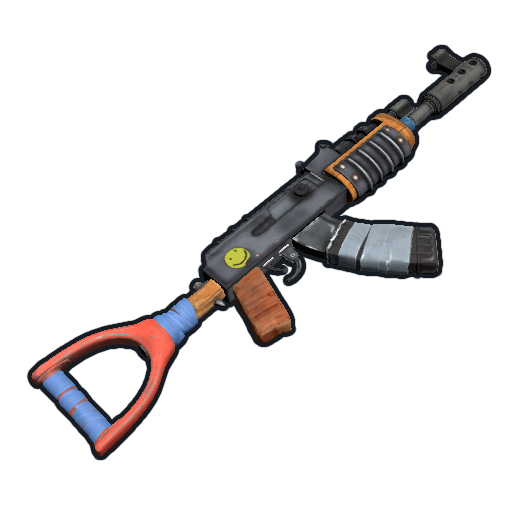 yet.
yet.
The in-game UI you need to know
Rust's UI is minimal on purpose. The game won't hold your hand. Here are the keys that matter from minute one:
- TAB — opens your inventory
- G — opens the map
- F1 — opens the console
- B — opens the emote wheel
- T — opens chat
You'll also want to know left-click swings your equipped tool, right-click is the secondary action, and E picks up items and interacts with things like doors and boxes (F toggles your flashlight).
Your first five minutes
When you load in, you'll be standing on a beach. You'll have exactly two things: a rock 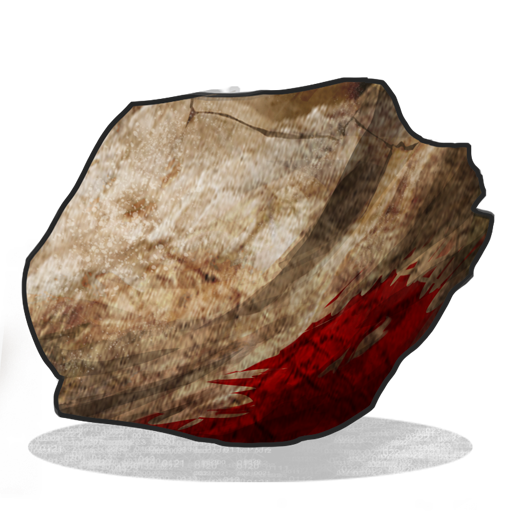 and a torch
 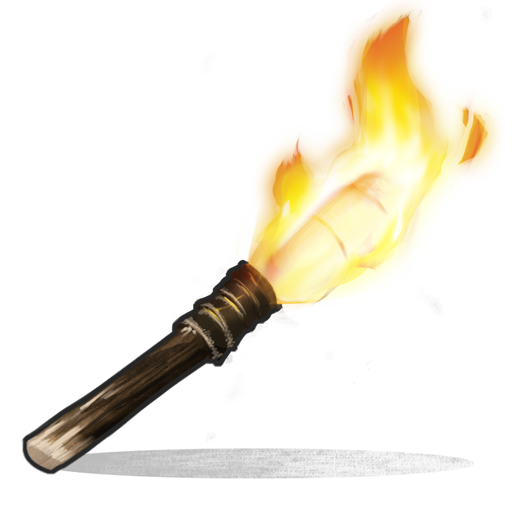 . That's it.
Your goal in the first hour isn't to fight anyone. It's to get inland, gather wood 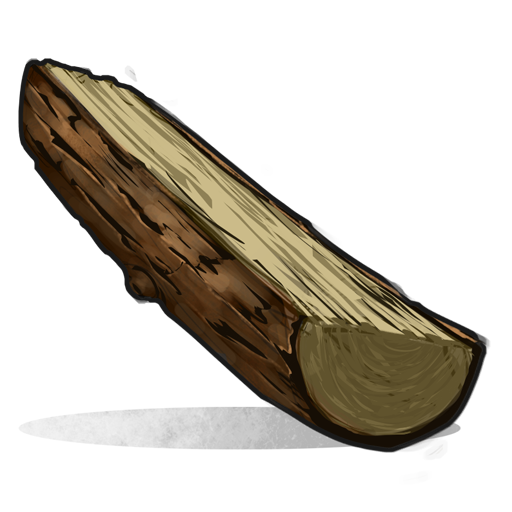 and stone
 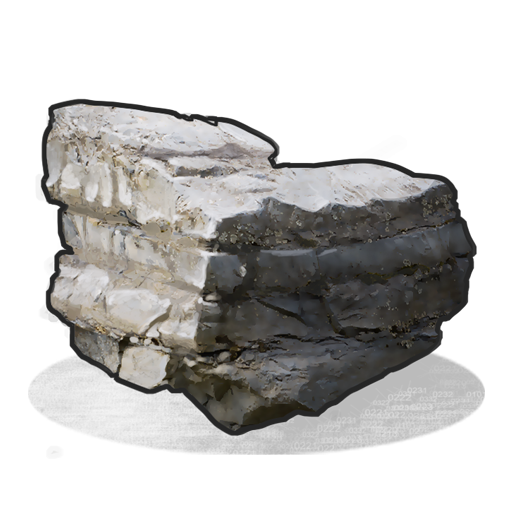 , craft basic tools, and get a roof over your head before nightfall.
Choosing your first server
When you launch Rust and open the server browser, you are looking at thousands of servers. Most new players pick badly and spend their first wipe getting farmed by veterans. This section explains the choices so you can pick a server that actually gives you room to learn.
Vanilla, modded, community and official — what the words mean
There are two things people mean when they talk about server "types": who runs the server, and what rules it uses.
- Official — servers run directly by Facepunch, the developers. They are pure vanilla and unmoderated. There are no admins watching for cheaters and they are often dominated by large clans (called zergs). Official is honest Rust, but it is rough for a complete beginner.
- Community — servers run by other players or hosting companies. These are the bulk of the browser. Many community servers are still vanilla, but they usually have active admins who ban cheaters and enforce rules. For a first server, a well-run community server is friendlier than official.
- Vanilla — the base game exactly as Facepunch designed it: 1x gather rate, no kits, no shops, full research grind. This is the "real" game and what every guide is written for.
- Modded — custom rules added by the server owner: faster gather rates (2x, 5x, 10x), instant crafting, starter kits, in-game shops, teleport commands. Modded servers are fun and reduce the grind, but they teach habits that do not transfer to vanilla.
A good middle ground for a beginner is a community server running 2x gather. It still teaches real progression but cuts the farming time roughly in half. Avoid anything above 5x for your first wipes — the economy breaks and you skip the resource-scarcity decisions that are the core of the game.
Reading the server-browser tags
Every server in the browser shows a row of tags and numbers. Learn to read them before you click Connect.
| What you see | What it tells you | What a beginner wants |
|---|---|---|
| Population (e.g. 84/150) | Players online out of the maximum slots | 20–60 active players — enough life, less competition |
| Gather rate / multiplier (1x, 2x, 5x) | How fast nodes and trees give resources | 1x to learn the real game, or 2x to save time |
| Wipe info (last wiped / next wipe) | When the map and progress last reset | Join within a day or two of a fresh wipe |
| Group / team limit tags | Max players allowed in one team | A capped server (see the next section) |
| Region / country flag | Where the server is hosted | Your own region, so your ping stays low |
| Ping (ms) | Your connection delay to the server | Under about 80 ms feels responsive |
Population, group limits and wipe schedule
Population is the single biggest factor. A 300-player server sounds exciting but means constant fighting and stripped resources. A near-empty server is lonely and the economy is dead. The sweet spot for learning is a server with 20–60 players actually online.
Group limits cap how many people can team up. On uncapped servers a clan of ten can wipe you for sport. A capped server keeps fights fair — more on this below.
Wipe schedule decides how far behind you can fall. Servers wipe weekly, biweekly or monthly, and the monthly force wipe on the first Thursday resets everyone. A weekly or biweekly wipe is best for a beginner: if your wipe goes badly, a fresh start is never more than a few days away. Join close to a wipe, not at the end of one, so you are not starting next to veterans in full gear.
Server modes: Solo / Duo / Trio & PvE / Softcore
Beyond gather rate and population, the biggest favour you can do yourself as a new player is picking a server mode that limits how badly things can go wrong. The two friendliest categories are group-capped (SDT) servers and PvE / Softcore servers.
Solo / Duo / Trio (SDT) servers
On a normal Rust server there is no limit on team size. A clan of eight or ten — a zerg — can roll over a new player without effort. SDT servers use a plugin that hard-caps the size of any group:
- Solo — you may not team with anyone. Everyone you meet is also alone.
- Duo — teams of at most two players.
- Trio — teams of at most three players.
The cap is enforced by a mix of team/clan plugins and active admins — plugins limit how many players can share a Tool Cupboard, locks and turret authorization, while admins spectate and remove groups that team beyond the limit. Enforcement is not perfectly automatic, but on a well-run server it works. The result is fights that match your numbers. If you are playing alone, a Solo or Duo server means you will never be jumped by a ten-person clan. SDT servers have been the fastest-growing Rust server format because they have a lower skill floor and match the natural way friends play — one person, or a group of two or three.
A widely recommended beginner setup is a 2x Solo/Duo/Trio server, biweekly wipe, under 60 players. It combines a fair gather rate, a fresh map every two weeks, capped group sizes and a manageable population.
PvE and Softcore servers
Two modes soften the harshest part of Rust — losing everything when you die.
| Mode | What changes | Best for |
|---|---|---|
| PvE | Players cannot damage or raid each other at all. You can still die to animals, fall damage, cold, radiation and the environment. | Your very first hours — learning controls, building and crafting with zero combat pressure. |
| Softcore | An official game mode. On death you automatically keep about 50% of your inventory instead of dropping all of it, and you can reclaim items at a town. Incoming bullet damage is also reduced, so fights last longer and you have time to react. | Your first taste of PvP without the gut-punch of losing every item each time you die. |
PvE is best treated as a tutorial, not a destination. You can learn how to gather, build a base and run a monument with no risk, but you will not learn the part of Rust that defines it: managing risk against other people. Softcore is the natural step up — it keeps PvP but removes the all-or-nothing punishment.
A friendly path for a brand-new player
- Start on a PvE server for a few hours. Learn movement, gathering, crafting and building with nothing on the line.
- Move to Softcore or a low-population 2x Solo/Duo server once the controls feel natural. Now you are practising real PvP, but a death does not erase your whole wipe.
- Graduate to a capped vanilla or 2x SDT server when you can hold your own. This is the real game, with fair group sizes protecting you from zergs.
To find these servers, use the filters in the in-game browser or a server-listing site: filter by the Solo, Duo, Trio, PvE or Softcore tags, sort by population into the 20–60 range, and check the wipe date so you are joining a fresh map.
Picking a server type: vanilla, Softcore, Hardcore, Primitive
Beyond mods and group caps, Rust itself ships several official ways to play. You have already met vanilla (the standard game) and Softcore (keep about half your inventory on death) above. Two more official types appear in the server browser — both are for later, but you should know what the tags mean when you see them. For the record, SmokeStack itself is a modded PvE server, the friendliest end of this whole spectrum.
Hardcore: vanilla with the training wheels removed
Per the August 2025 "Harder Core" refresh, Hardcore hides the map behind a fog of war that only reveals where you have actually walked, and your own position is never shown unless you carry a handheld compass in your belt — the compass strip at the top of the screen is removed too. Firearms cannot be crafted or researched at all: guns come only from world loot, though found weapons can be repaired. Ammo costs 5x the usual resources to craft, sleeping bags have a 15-minute respawn cooldown (beds 10), and base upkeep is doubled. Facepunch built it to make "the consequences for dying" feel significant — it is for players who already know Rust and want every fight to matter. Skip it for now.
Primitive: Rust before gunpowder
The Primitive mode (February 2025) imagines "a distant future where the knowledge of high tech items have been lost." Combat is melee, bows and crossbows, spearguns, the Eoka and shields — no automatic rifles, no rockets or C4. Raiding uses the four siege weapons (catapult, ballista, battering ram, siege tower), metal and armoured building grades are removed, and high-tech monuments like Oil Rig and Missile Silo are gone. The beginner-friendly upside: nobody can gun you down from a hill you never saw. Fights are close, slow and readable — some new players genuinely find it a gentler on-ramp than vanilla PvP.
Quick recap
- Rust is a multiplayer survival game by Facepunch with regular wipes — the big one is the first Thursday of each month.
- Pick a low-pop, vanilla, weekly-wipe server in your region for your first run.
- Learn these keys: TAB inventory, G map, F1 console, B emotes, T chat.
- You start with a rock and a torch . Drink fresh water, not saltwater.
- Don't trust anyone on the beach. Get inland fast.
Next: Your first hour: from spawn to wooden shelter — what to do in the 60 minutes after you spawn. Want more detail? New Player Onboarding — same topic, deeper dive.