Building
Last updated: May 18, 2026 Patch context: post-May 7, 2026 mortar update (workbench upgrades, HE/frag rounds)
Building is the single most important system in Rust. Everything else — power, industrial, plants, scrap  stockpiles — sits inside walls you built. A base that lets the wrong wall face outward, that puts the TC
  where it can be raided cheap, or that skipped the honeycomb is going to get raided no matter how good your gunplay is. This file is the math.
The four building tiers
The building plan and hammer — how placement actually works
Every structure in the game is placed with the building plan  (often called the "hammer's cousin"). Equip it, scroll the mouse wheel to cycle through the piece list — foundation, foundation triangle, floor, wall, low wall, doorway, window frame, half-height frames, stairs, roof, pillar — and the game projects a ghost preview in twig. The preview turns green when the placement is legal and red when it is blocked (clipping terrain, no socket, outside build privilege, or unstable). Left-click commits the piece in twig for the wood cost shown.
Placement is socket-based. Each existing piece exposes sockets — a foundation has wall sockets on its four edges and a floor socket above; a wall has a floor/roof socket on top and a wall socket on each vertical edge. You cannot place a wall in mid-air; it must snap to a socket. This is why the very first foundation is placed on open ground and everything else grows outward from it. Hold the piece near a socket and it snaps; nudge your crosshair to pick which of several candidate sockets it locks onto.
Rotation: while the ghost is showing, press R (default) to rotate the piece in fixed increments. For foundation triangles and stairs this rotates the whole shape; for walls this flips which face is the hard side — the single most important use of rotate in the game. Always rotate-check a wall before you commit it so the brick/metal face points outward (covered in depth in the soft-side section below).
The hammer  is a separate tool that operates on pieces that are already placed. Look at a piece and hold right-click to open the radial menu: Upgrade to Wood, Stone, Sheet Metal, or Armored (the game pulls the material straight from your inventory), Rotate (only legal during the placement grace window), Demolish (only during the grace window, or always if you have a sledgehammer-free demolish from your own TC within ~10 minutes), and Repair with a left-click hold to heal damaged pieces back to full using a fraction of the build cost. Repairing costs nothing if the piece is already at full HP, so you can spam left-click during a raid defense to top walls between explosive hits.
Building privilege — the invisible permission layer
Every action above only works inside building privilege. When you place a Tool Cupboard and authorize yourself on it, you gain build privilege inside its 50-metre bubble: you can place, upgrade, rotate, demolish, and repair. Players not authorized on that TC can do none of those things inside the bubble — they cannot even place a twig foundation. This is what stops a raider from simply walling themselves into your base or building a ramp over your wall. Privilege is per-TC and per-player; on a team everyone who needs to build must be added to the cupboard's authorized list. Lose the TC in a raid and you instantly lose privilege over everything it covered — which is why the cupboard, not the loot, is the real heart of the base.
You upgrade walls (and floors, doors, foundations, roofs) through four tiers using the building plan or the hammer 's upgrade menu. Each step up multiplies HP and material cost.
| Tier | Wall cost | Wall HP | Soft-side raid (sulfur  to break one wall) to break one wall) |
|---|---|---|---|
| Twig | 10 wood  |
10 | A hatchet  . Anyone walks through it. . Anyone walks through it. |
| Wood |
50 wood |
250 | ~400 sulfur (1 satchel  ) ) |
Stone  |
300 stone |
500 | ~1,400 sulfur (4 satchels ) |
| Sheet Metal | 100 metal frags  |
1,000 | ~2,800 sulfur (2 C4  ) ) |
| Armored | 25 HQM  |
2,000 | ~21,000 sulfur (15 rockets  ) ) |
Twig has no place in a real base. It exists for placement preview and for sneaky bridges/floors. Wood is wipe-day starter only — falls to a single satchel . Stone is the actual baseline for any base meant to survive past hour two. Sheet metal is where most solo/duo bases settle for the wipe. Armored is HQM -gated and most bases reserve it for the TC core and bunker walls only because 25 HQM per wall adds up fast.
Every grade in full depth — HP, cost, decay, and when to use it
The four grades are not just "more HP" — each one changes the explosive a raider must bring, the workbench tier needed to even craft the counter, and how fast the piece rots without upkeep. Read this table as the spine of every base-cost decision you make.
| Grade | Wall HP | Upgrade cost (per wall) | Soft-side raid | Hard-side raid | Outdoor decay | When to use |
|---|---|---|---|---|---|---|
| Twig | 10 | 10 wood | 1 hatchet / 1 melee hit | same — no soft/hard | Decays in minutes, no TC needed | Placement preview, sneaky bridges, raid-tower scaffolds you abandon |
| Wood | 250 | 50 wood | 1 satchel (~480 sulfur) / chop with a hatchet or fire | 2 satchels | ~5 HP/hr | Wipe-day first hour only — flammable, axe-able, must be upgraded fast |
| Stone | 500 | 300 stone | 4 satchels (~1,400) or 1 C4 (~2,200) | 2 C4 / 5 satchels | ~5 HP/hr (0 indoors) | The real baseline — every external wall of a survivable base |
| Sheet Metal | 1,000 | 200 metal fragments | 2 C4 (~4,400) or 8 rockets (~11,200) | 4 C4 / 8 rockets | ~3 HP/hr (0 indoors) | Solo/duo core walls; fire-immune, melee-immune |
| Armored | 2,000 | 25 HQM | 4 C4 (~8,800) or 15 rockets (~21,000) | 8 C4 / 15 rockets | ~1 HP/hr (0 indoors) | TC core and bunker walls only — HQM-gated, very expensive at scale |
Twig is not a defensive grade at all — it is the state every piece is born in. Its only jobs are showing you a free preview of where a piece will sit and building disposable structures (a one-time raid ladder, a temporary bridge) that you do not mind losing instantly to decay. Never log off with anything load-bearing left in twig.
Wood is the wipe-day grade. It goes up fast and cheap, but it has three fatal weaknesses: it burns (incendiary ammo, a flame turret, even a thrown Molotov chews it down), it can be chopped with a simple hatchet for zero explosive cost, and a single satchel charge soft-sides a wall. Treat wood as scaffolding you will replace within the hour, not as a wall you trust overnight.
Stone is the line where a base becomes a base. It is fireproof, immune to melee, and forces a raider to commit real explosives. The jump from wood to stone roughly quadruples raid cost for a modest stone cost, which is the best value upgrade in the whole progression — get every external wall to stone before you do anything else.
Sheet metal doubles stone's HP again and is the comfortable resting grade for most solo and duo cores. It needs a Workbench-1 tier of progression to sustain (metal fragments come from smelting metal ore), but it is immune to fire and melee and demands C4 or rockets — no satchel raid is realistic against it.
Armored is the top grade and is gated behind High Quality Metal, which only comes from HQM ore or recycling components. At 25 HQM per wall it is brutally expensive to run across a whole base, so the standard pattern is to armor only the innermost ring around the Tool Cupboard and loot, leaving the outer shell and honeycomb in stone. An all-armored base is a clan-only flex.
Note the decay column: higher grades decay slower, which matters for offline servers and outbuildings. A fully sealed indoor piece of any grade decays at zero — decay only eats pieces exposed to open sky, and even those are fully frozen while the Tool Cupboard holds the matching material.
Soft side vs. hard side — the most important rule in the game
When you place a wall, one side has visible brick/metal pattern (the hard side, outward-facing by default in single placement) and the other side has the wooden frame showing (the soft side, inward-facing). Soft side takes 2x damage from all explosives. This is the single biggest reason raiders pick certain walls to blow.
Rule one: every external wall faces hard side out. Always. If you have a wall placed wrong, sledgehammer it and replace it before you log off. A backward wall is an invitation — raiders ladder, see the soft side, and spend half the explosives.
Rule two: this is why honeycomb matters. Honeycomb is a second layer of walls behind your external walls, creating triangle pockets. The interior walls of those pockets have their soft side facing where a raider would emerge after breaking the outer wall — meaning the second wall in resists from the hard side because of how triangle geometry forces orientation. Good honeycomb means the raider keeps facing hard sides over and over.
Reading the soft side at a glance — the 2x mechanic in detail
The "2x" is exact: explosives, melee, and fire all deal double damage to the soft side of a wall, doorway, window frame, or floor. A stone wall has 500 HP; a C4 deals roughly 275 to the hard face but ~550 to the soft face, which is why one C4 soft-sides a stone wall and two are needed on the hard face. The entire economy of raiding is built on finding and hitting soft sides.
How to read which side is which without guessing:
- Stone: the hard side shows a flat dressed-brick surface; the soft side shows a raised timber-frame lattice (diagonal wooden braces). Wood frame visible = soft side = you are looking at the inside.
- Sheet metal: the hard side is smooth riveted plate; the soft side shows the exposed metal support struts and crossbars behind the plate.
- Armored: the hard side is a heavy plate with a small horizontal vision slit; the soft side shows the bracing and bolt heads. The slit always sits on the hard (outward) face.
- Doorways and window frames inherit the same rule — the wall they sit in has a soft and hard side, so a backward doorway hands a raider a cheap soft-side door.
How to never face soft side out: when the building-plan ghost is up, the wall previews with the hard side toward you by default in most placements — but corner and adjoining-wall placements can silently flip it. Before you left-click, press rotate once and watch the texture swap; pick the orientation where the brick/plate faces away from your loot. After the base is up, walk the full exterior perimeter once and look at every wall from outside: if you see timber lattice or strut bracing from outside, that wall is backward. Hammer-rotate it within the grace window, or sledgehammer and replace it if the window has expired. One backward external wall can halve the cost of an entire raid.
The hard-side bonus is also why raiders ladder up to a window or open frame — an open frame lets them reach an interior wall and plant on its soft side from outside. Closed shutters and sealed frames deny that. And it is the geometric backbone of honeycomb: triangle pockets are arranged so that after a raider blows one wall, the next wall they meet still presents its hard side to them.
Honeycombing
Honeycomb is the difference between "lost the wipe" and "they bounced off." The core idea: you don't just put one wall between your loot and the outside. You put a wall, a useless triangle of space, then another wall, then more triangles, then the loot.
A bare 2x2 stone base has roughly 4 external walls. To breach it costs ~5,600 sulfur (4 walls × ~1,400). A 2x2 with one honeycomb layer in stone has ~12 walls between any loot and the outside, costs ~9,000–12,000 stone to build, and forces raiders to spend 11,200–16,800 sulfur to reach any loot room. That ratio — defender pays 12k stone , raider pays 12k+ sulfur — is the most efficient cost-per-defense in the game.
Two-layer honeycomb (you'll see this on serious clan bases) doubles the raid cost again but quadruples your stone cost. Sweet spot for solo/duo is one full layer. Skip honeycomb on roofs above sealed core rooms only — anything that touches the outside gets the layer.
Honeycomb theory — triangle geometry and the cost ratio
Honeycomb works because of a quirk of how triangle foundations and walls socket together. When you place a triangle floor against a square and wall its open edges, the walls of that triangle are forced by the geometry to present their hard side toward the outside of the pocket. A raider who blows your external wall does not step into your base — they step into a sealed triangular dead-end and are immediately facing another hard-side wall. They must blow that one too, and the next, and the next. Each pocket you add multiplies the explosive bill while costing you only the build material of a few walls and a triangle floor.
Single layer vs. double layer. A single honeycomb layer wraps one ring of triangle pockets around your core — this is the correct choice for solos and duos. A double layer adds a second ring of pockets; it roughly doubles the raid cost again but quadruples your own build cost and footprint, which is why you only see it on clan compounds with the resources to sustain the upkeep.
| Base shell | Walls a raider must break to loot | Your build cost | Raider's sulfur bill | Defence ratio |
|---|---|---|---|---|
| Bare 2x2, no honeycomb | ~2-3 stone walls | ~3-4k stone | ~3,000-4,000 | roughly 1 : 1 — poor |
| 2x2, single-layer honeycomb | ~6-8 stone walls + door | ~9-12k stone | ~11,000-16,000 | roughly 1 : 1.3 in your favour |
| 2x2, double-layer honeycomb | ~12+ stone walls + doors | ~22-28k stone | ~22,000-30,000+ | strong, but heavy upkeep |
The single-layer line is the sweet spot: you spend cheap, plentiful stone, and the raider must spend rare, slow-farmed sulfur. Where to skip honeycomb: any face that is already sealed and unreachable — the underside of a ground-level foundation, a roof directly above a sealed core with no twig-laddering surface beside it, and shared walls deep inside the base that no raider path touches. Honeycomb only earns its keep where a raider can physically place a charge, so spend it on every wall that touches open air and skip it everywhere a charge cannot reach. A common mistake is honeycombing the roof of a one-storey base while leaving a ground-floor wall single — the raider just hits the cheap wall.
The Tool Cupboard (TC ) — non-negotiable rules
The TC anchors your base. Without one, anyone can build over your foundation. With it, you have authorization to repair, build, and most importantly your walls have decay protection from the materials stored inside.
- The TC has a 50-meter no-build radius. Once placed, no one can put a new TC inside that bubble. This is your no-build defense — players can't twig-ladder up to your roof and place a competing TC .
- The TC must be fed materials to prevent decay. Walls decay roughly 24 hours after the TC empties out. Keep 1k+ wood , 5k+ stone , 500+ frags , 100+ HQM in there minimum during a wipe.
- The TC has only 24 inventory slots. Don't use it as your main storage — use it for upkeep materials only.
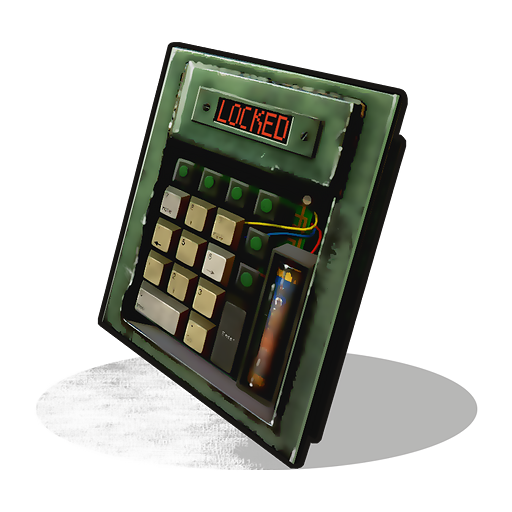
- Hide your TC . It's the raid target. Put it in a sealed core, behind 2+ walls of armor, with a code lock
 and a key lock
  as a double layer. If raiders can't find it or can't reach it in their explosive budget, they bounce.
 - Common mistake: people put the TC in the first room they enter. Raid that wall, you're authorized. Push it deep.
Foundations, floors, roofs, and frames
Foundations cost the same as walls per tier but have higher HP (twice). They can't be replaced once placed without sledge — but sledge takes 10 minutes per soak. The first 10 minutes of placement is the decay timer  for replacement, during which you (or anyone, if no TC ) can pick the foundation up free.
Floors above ground level are walls' weak cousins — same HP as walls, but raiders can shoot from below. Always seal the bottom of bunkers (no triangle floors you can shoot up into the base from outside). Embrasures placed in floor pieces let you shoot down without exposing your head.
Roofs come in two shapes: full roof piece (square) and roof triangle. Roof triangles are sometimes used in 2x2 designs to allow water collectors on the top edge. Sloped roofs prevent rooftop camping but waste material.
Frames are wall variants with cutouts: doorways, windows, embrasures, garage door 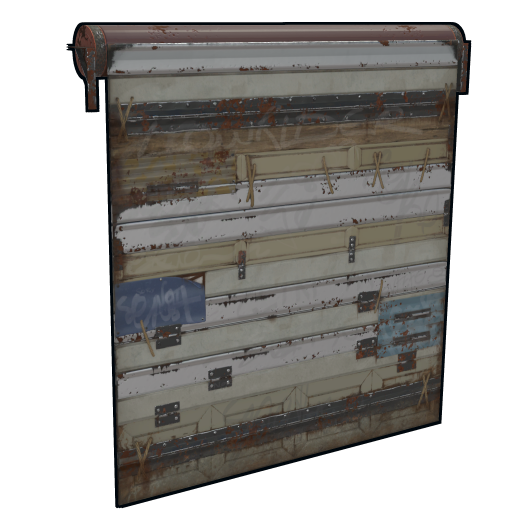 frames. Use embrasures inside core walls for shooting through during raid defense — they let you shoot out but not be shot at except through the slit. Garage doorways take garage doors (600 HP, takes 3 C4 to break — the armored door remains the strongest door in the game).
HP differences and the placement grace window
Not every piece shares wall HP. Foundations carry roughly double a wall's HP at the same grade (a stone foundation is around 1,000 HP), which is why raiders almost never breach through a foundation — they go through walls or up through floors. Floors and roofs at a given grade sit at the same HP as a wall of that grade, but a floor has a hidden weakness: a raider standing under an elevated floor can plant a charge on its underside, and that underside is the soft face. Always seal the space beneath any elevated floor a raider could stand in.
The placement grace window is a short timer (about 10 minutes for foundations, ~30 minutes for most other pieces) that begins the instant a piece is placed. During the window, the piece's owner — or anyone, if no TC covers it — can demolish and pick the piece up for free with the hammer, and can also rotate it. After the window closes, the piece is permanent: the only way to remove it is a sledgehammer, which takes many slow soak hits. This is why you rotate-check and placement-check while building, not after — fix mistakes inside the window or pay the sledgehammer tax.
Bunkers, embrasures, and garage-door frames
A bunker exploits the grace window and stability. The classic version uses a floor or foundation that is dropped into place to seal a core, then removed and re-placed to open it — or a garage-door frame on the underside that only authorized players can pass. A peek/online bunker keeps the loot in a sealed cell that has no door at all; you reach it by destroying and rebuilding a piece you own, so a raider with no build privilege simply cannot follow. Bunkers are powerful but fiddly — one stability miscalculation collapses the floor above.
Embrasures are wall and floor frames with a narrow slit. A wall embrasure lets you fire out at a raider planting charges while presenting only a thin slit for return fire. A floor embrasure placed above your front door is the strongest defensive piece in the game for its cost: a raider has to stand still to plant C4, and you shoot straight down through the slit, often killing them off their own charge. Build two or three embrasure sightlines onto every external doorway.
Garage-door frames take the 600 HP garage door — the widest door in the game. They are the standard bunker entrance and the standard wide vehicle/loot entry, and the door is fire-resistant. A garage door costs 3 C4 to breach, sitting between a stone wall and an armored wall in raid cost, so it is a genuine defensive piece and not just a convenience.
The stability system — why bases collapse
Every piece carries a hidden stability value, shown as a percentage when you look at the piece at melee range with a hammer. Foundations sit at 100% because they touch the ground. Stability drains as a piece gets farther from a ground connection: a wall on a foundation is highly stable, a floor cantilevered out from that wall is less stable, a wall on top of that floor less again. If a piece's stability would fall to 0% it cannot be placed at all (the ghost stays red), and if a supporting piece is destroyed so that pieces above it lose all support, those pieces collapse and are destroyed.
Practical limits: you can cantilever floors only a couple of tiles past their last support before stability runs out, and tall towers need walls or pillars carrying the load down to a foundation. Pillars are cheap dedicated support columns — drop one under the middle of a long unsupported floor span and stability is restored. Stability is also a raid tool used against you: collapsing a key support wall can drop an entire upper floor, so raiders sometimes attack the structure under your loot rather than the loot room itself. When you design multi-storey bases, trace every floor back to a foundation and make sure no critical room depends on a single breakable support.
Building skins — the 2026 cosmetic layer
Building skins are a purely cosmetic system: they re-texture your building blocks (and matching doors) without changing HP, cost, soft/hard mechanics, or raid math. The official store set includes themes such as Adobe, Brick, Shipping Container, Legacy Wood, Brutalist, and Jungle; skins are bound to your account, applied through the building-plan or hammer skin menu, and cannot be traded. They are worth knowing for one practical reason — a skin changes the look of the hard and soft faces, so make sure you can still identify the soft side under whatever skin you run. Camouflage skins can also help a base blend into terrain, but they never alter the underlying defensive numbers in this guide.
Doors
| Door | HP | Cost | Notes |
|---|---|---|---|
Wood door 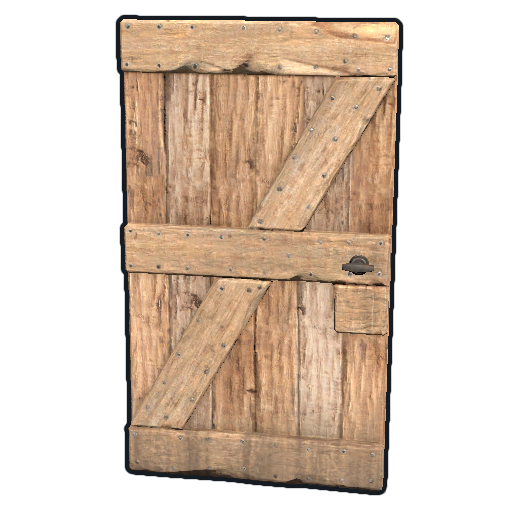 |
200 | 300 wood |
Wipe-day filler. Falls to 1 satchel . |
Sheet metal door 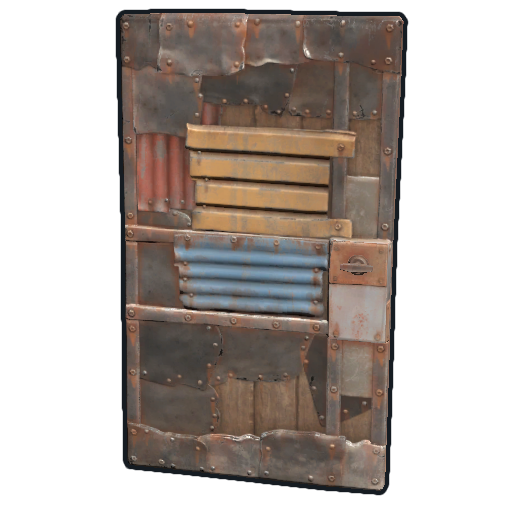 |
250 | 150 frags |
The standard. 1 C4 or 4 satchels . |
Armored door 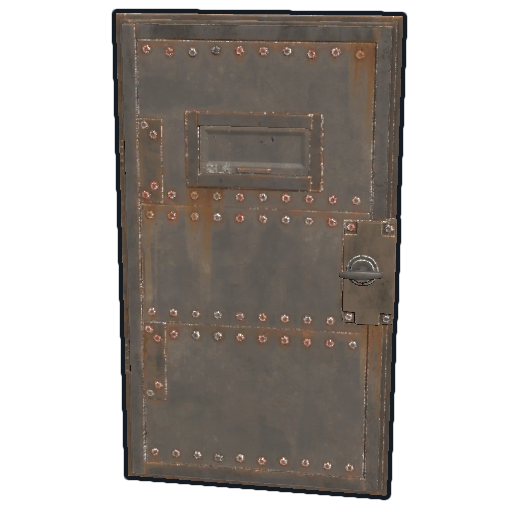 |
1000 | 20 HQM + 5 gears |
Best per-cost defense at WB3 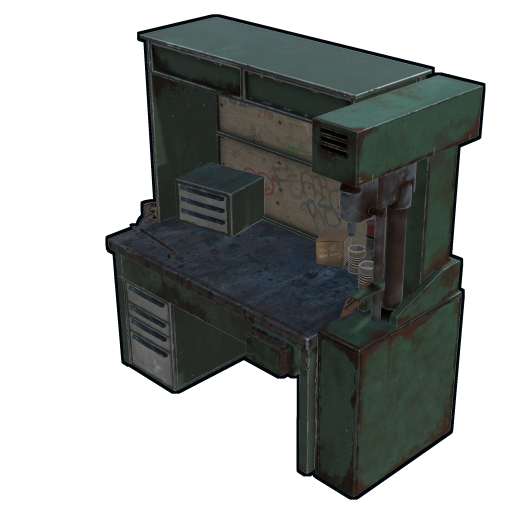 . 2 C4 . . 2 C4 . |
| Garage door |
600 | 300 frags + 2 gears |
Wide, slow to open/close, 3 C4 . Bunker entrance favorite. |
| Double door | 250 | 200 frags |
Pair side-by-side fills a doorway-and-a-half. |
| Ladder hatch | 250 | 300 frags + 3 gears + 1 wooden ladder |
Floor hatch with built-in ladder. Bunker classic. |
Common mistake: putting a wood door anywhere in your live base past hour 2. Wood doors are softer than wood walls in raid math.
Pro tip: code locks are 100 frags and instant. Key locks are 75 wood . Use code locks for main doors, key locks as a second layer on the TC door so a teamie who isn't trusted with full base access can still get to the TC for upkeep.
Window frames, embrasures, shooting floors
A window frame with no shutter is a hole. A window frame with iron shutters costs more but can be opened/closed with E. A wall with embrasure cutouts (the slit kind) lets you shoot through it without being shot back except by a perfectly aimed return — same applies to floor embrasures looking down.
For raid defense, you want:
- 2–3 embrasure slits looking at every external doorway
- 1 floor embrasure looking down at the front door (you sit above, raider plants C4 , you push them off the C4 with bullets)
- Window shutters on every cosmetic window (close them before logout)
Wallpaper
Wallpaper landed in the September 5, 2024 Time To Kill update as a default blueprint, no research needed: 10 cloth crafts 2 pieces. Per the official post, wallpapers "can only be applied to the interior side of your walls," which in practice means the soft side of your building blocks. Point at the interior face of a wall and place it like any deployable; Facepunch describes removal as easy, so redecorating is painless.
Know what it is not: wallpaper is purely visual. It adds no HP and no protection, and a wallpapered wall raids exactly like a bare one, so never count it as a soft-side fix. It also will not interfere with placing other deployables on the same wall, so shelves and lights coexist with it fine.
Skins: the base game ships the Vintage default in four colors (blue, red, green, yellow), with more designs in paid packs. Per the official post, "just like other deployable items, wallpapers can be skinned during crafting, in a repair bench or after being deployed using the spray can."
The July 2026 change: as of the July 2, 2026 Common Ground update, reskinning a deployed wallpaper is free. The patch note reads: "Fixed needing cloth in your inventory to reskin wallpapers (reskin is free)." Before the fix, the spray can demanded cloth in your inventory to swap a skin; now you can recolor every room at zero cost. If you are eyeing the paid Glowing Wallpaper designs, the buy/sell math lives on the Skin Economy page; all this page cares about is that the interior looks good and costs nothing to keep fresh.
The May 7, 2026 mortar patch — building implications
The mortar update added a deployable Workbench-2-tier weapon that fires HE and frag rounds over long range. The standard mortar damages structures. Effects on building:
- 2x2 and 1x1 bases are largely safe. Mortars are inefficient against small footprints — the cost per wall via mortar is higher than C4 . Solo bases keep their meta.
- Clan compounds got hit hard. Wide exterior walls and large compounds now eat HE mortar rounds from outside the wall range. Compounds need overhead cover (roof spam) and external walls pushed further from the actual base.
- Aim is purely trial-and-error. No reticle, no trajectory arc. This means a raider needs a spotter and time — which means mortars at night against a base with auto-turrets
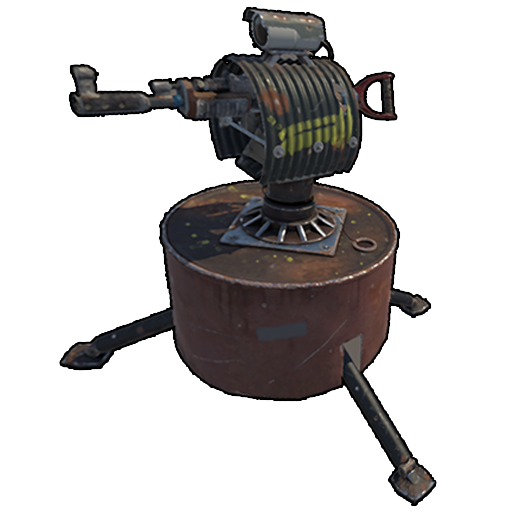 are still suicide. Daytime, undefended, far compound walls are the target profile.
 - Workbench 2
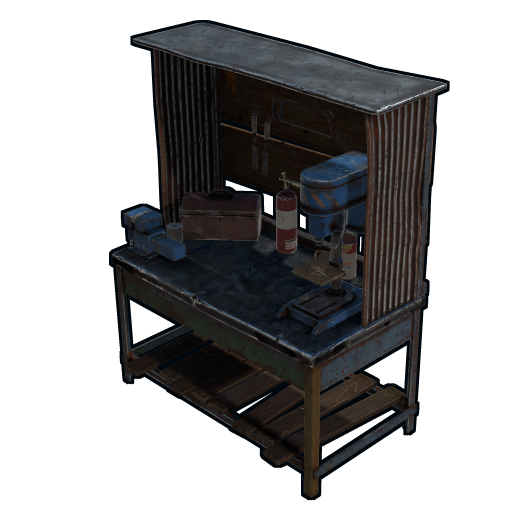 has nine new upgrade modules. These are not craftable, only found. Build a WB2 minimum for any base that wants to research mid-tier components, but don't expect to easily upgrade it.
The full May 7, 2026 "Upgrade Hard, Raid Harder" patch notes are in 11_Patch_Meta_2026.md.
Decay
Walls and structures lose HP slowly when not under TC authorization or when the TC is empty. Decay rates per hour:
- Twig: instantaneous (no TC needed, decays in minutes)
- Wood : 5 HP/hour outdoors
- Stone : 5 HP/hour outdoors, 0 indoors
- Sheet metal: 3 HP/hour outdoors, 0 indoors
- Armored: 1 HP/hour outdoors, 0 indoors
Indoors means under a sealed roof. Outdoors means exposed sky. Decay is paused entirely when the TC has materials of the wall's tier inside. If your TC has 0 stone but 5k wood and your walls are stone, stone walls decay until you put stone in the TC.
Pro tip: sloped roofs and decorative structures decay even with a full TC if the TC is more than ~50 meters away. Multi-building compounds need a TC per building or extra TCs in outbuildings.
Floor stacks, jump-down boxes, foundation steps
A floor stack is two floors placed one above the other with a wall between them, used as a defensive layer. A jump-down box is a 1x1 box with a foundation removed so you can drop down a story — common in solo base designs because the jump-down is one-way, breaking pursuit.
Foundation steps (offset foundations placed at slightly different heights) confuse external builders trying to attach. They also slow ladder placement, which buys you a couple seconds during raid response. Worth doing on the perimeter foundation row.
Common base-building mistakes
- Hard side facing in. Every external wall, every time. Hammer -and-rotate any wall placed wrong.
- TC near front door. Push it deep. If the TC dies, the wipe dies.
- Wood doors past hour 2. Upgrade to sheet metal the moment you have 150 frags .
- Skipping honeycomb. Always at least one layer in stone or better.
- Empty TC at logout. Stack it before you log. Decay over a 12-hour sleep is recoverable on stone , painful on armored.
- No window shutters. Open frames let a raider plant C4 on the inside soft side from outside the base.
- Single layer over loot. Always two walls minimum between any loot room and the outside.
More mistakes and pro tips, expanded
- Leaving pieces in twig at logout. Twig decays in minutes and a twig wall is one hatchet hit — upgrade everything load-bearing before you log.
- Open frames with no shutters or doors. An open window or doorway frame lets a raider reach an interior soft side from outside. Close shutters and door-up every frame before logout.
- Backward walls discovered too late. Walk the full exterior once after building — fix any wall showing timber lattice or strut bracing from outside while the grace window is still open.
- Wrong material in the TC. Decay is only frozen for a grade if the cupboard holds that grade's material — a TC full of wood will not protect stone walls. Stock wood, stone, frags, and HQM together.
- Honeycombing the roof but not the ground walls. Raiders take the cheapest path; honeycomb every air-facing face evenly.
- One TC for a sprawling compound. Decay protection has range — outbuildings past ~50 m of the TC need their own cupboard.
- Pro tip — repair between hits. During an online raid, hammer-repair walls between explosive impacts; a topped-up wall can force the raider to spend an extra charge.
- Pro tip — stagger your door grades inward. Sheet metal on the entry airlock, armored deeper in. A raider who spends C4 on the outer door still faces the expensive door at the core.
- Pro tip — hide a backup TC. A small concealed cupboard nearby lets you keep build privilege and rebuild even if the main TC is destroyed in a raid.
- Pro tip — pillar long spans early. If a floor plan needs a wide open room, plan the support pillars before you build up, or stability will block the roof later.
Quick raid-cost reference
Soft side, single wall:
- Stone wall: 4 satchels (~1,200 sulfur ) or 1 C4 (~2,200 sulfur )
- Sheet metal wall: 2 C4 (~4,400 sulfur ) or 8 rockets (~11,200 sulfur )
- Armored wall: 15 rockets (~21,000 sulfur )
- Sheet metal door : 1 C4 (~2,200 sulfur ). Full breach takes 1 C4 because door HP is 250 vs C4 550 soft damage.
- Garage door : 3 C4 (~6,600 sulfur )
- Armored door : 2 C4 (~4,400 sulfur )
Full table by item is in 10_Cheatsheets.md. The general rule: soft-side stone with one honeycomb costs raiders about 8–12k sulfur per breach attempt, which is roughly 30+ minutes of dedicated farming at scrap -tier and far more than most raiders will spend on a solo base.
What "good enough" looks like for a solo
- 2x2 stone base with full single-layer honeycomb (~12k stone )
- Sheet metal door on main entrance
- Hidden TC behind armored wall and second armored door (~50 HQM upgrade)
- 1 auto-turret (covered in
06_Automation_Circuits.md) with shotgun trap backup - Window shutters closed at logout
- Stack the TC : 2k wood , 8k stone , 500 frags , 100 HQM minimum
That base costs you about 1 hour of farming and survives an offline raid for 12k+ sulfur of explosives. Most raiders won't pay that for a solo.