Base Designs
Last updated: May 18, 2026 Patch context: post-May 7, 2026 mortar update
This file lays out base designs by group size. Each design has a cost breakdown (raw materials), a raid-cost estimate (what an attacker has to spend in sulfur  to reach loot), and the design's weakness. There's no "best base" — there's the best base for your group size, your time on the wipe, and how much you're willing to farm before logout.
For the underlying mechanics (honeycomb, soft-side rule, doors, TC  ), see
 01_Building.md. For automation defenses (auto-turrets  , shotgun traps), see
 06_Automation_Circuits.md.
Choosing your base size
The single most common mistake a new builder makes is copying a design that does not match the group actually defending it. A base is not "good" or "bad" in the abstract — it is good for a specific number of farmers, a specific play schedule, and a specific server population. Before you place a single foundation, work through the decision factors below honestly.
The five decision factors
- Active players, not roster size. A "trio" where one teammate logs in twice a week is a duo. Size your base to the count of people who reliably defend during prime time, then add no more than one footprint of growth room.
- Wipe schedule. On a weekly-wipe server you have roughly 7 days of value to protect, so a fast 2x2 that is finished by hour 8 beats a sprawling compound you never complete. On a monthly server the same compound pays off because you live in it for 30 days.
- Server population and raid pressure. A 200-pop official is a raid every night; lean small, deep, and boring so you are not worth the sulfur. A 40-pop community server lets a clan run a visible compound because there are fewer crews able to fund a 60k-sulfur raid.
- Farm capacity. Upkeep is paid in raw materials every 24 in-game hours. If your group cannot comfortably farm the daily upkeep plus a raid-repair buffer, your base is too big. Undersized-and-paid beats oversized-and-decaying every wipe.
- Time budget per session. A base you cannot rebuild after a raid in one evening is a base you will abandon. Match the rebuild cost to the hours you can actually play.
| Group | Recommended footprint | Stone budget | Daily upkeep (approx) | Finish by |
|---|---|---|---|---|
| Solo | 2x2 bunker | 12,000-15,000 | 1,800-2,400 stone | Hour 8 |
| Duo | 2x2 or 3x2 | 14,000-22,000 | 2,400-3,500 stone | Hour 6-10 |
| Trio | 3x3 or 4x2 | 22,000-35,000 | 3,800-5,500 stone | Day 1 |
| Clan (5+) | Compound | 80,000-150,000 | 9,000-18,000 stone | Day 1-2 |
If you are torn between two sizes, build the smaller one. You can always honeycomb outward or add an external module mid-wipe; you cannot easily shrink a base whose upkeep is bleeding you dry. The cardinal rule of base sizing: the right base is the largest one your group can fully wall, fully honeycomb, and fully pay for — and not one foundation larger.
Solo bases
A solo base has one priority: cost-to-raid > cost-to-build by the largest possible ratio. You're not going to defend it while you log off, so the base itself does the defending.
The 1x1 starter
The classic wipe-day shelter. One foundation, four walls, ceiling, door. Stone  .
.
| Resource | Amount |
|---|---|
| Stone |
1,500 |
Wood  |
500 (for door, frames) |
Metal frags  |
150 (sheet metal door  ) ) |
| Build time solo | 8–12 min from spawn |
Raid cost (soft side, one stone wall + door): ~1,400 sulfur . Anyone with one C4  takes it. This is not your wipe base — this is your hour-1 stash to keep your starter loot off your corpse. Move out within 3–4 hours.
Weakness: any explosive raids it. No honeycomb, no depth.
The 2x2 honeycombed
The actual solo wipe base. Two foundations wide, two long, two stories tall, full honeycomb on the outer ring of the bottom floor.
| Resource | Amount |
|---|---|
| Stone |
12,000–14,000 |
| Wood |
2,500 |
| Metal frags |
800–1,200 |
HQM  |
50–100 (upgrade TC walls + main door) |
| Build time solo | 60–90 min from spawn (assuming farmed materials in advance) |
Layout: bottom floor is the storage/TC core, honeycombed on all four sides. Second floor is the loot room with armored door  . Bunker hatch into a sealed core 1x1 under the TC for the soul stash (the box that holds the irreplaceable stuff). Two embrasure window slits at front door height.
Raid cost: 8,000–12,000 sulfur to reach the TC , +4,000 sulfur to crack the soul stash if they find it. Most solos won't get raided.
Weakness: roof rush. If your roof isn't double-stacked, raiders ladder up and breach down through your loot room directly. Always two-layer the roof above the loot room.
The triangle bunker solo
A circular base around a triangle core, with the TC and bunker in the middle triangle. Smaller footprint than a 2x2 but more honeycomb walls per material.
| Resource | Amount |
|---|---|
| Stone |
9,000–11,000 |
| Wood |
2,000 |
| Metal frags |
600 |
| HQM |
50 |
| Build time | 45–75 min |
Raid cost: 7,000–10,000 sulfur . Slightly less than 2x2 but smaller storage footprint. Good if you don't need much loot space.
Weakness: smaller storage. You will run out of box space by hour 8.
Which solo base, and when
The three solo designs above are not competitors — they are a sequence, and a checklist for matching the base to the moment in the wipe.
- 1x1 starter — hours 0 to 4 only. Its job is to keep your hatchet, bag, and starter scrap off your corpse while you farm the first stone. It raids for roughly 1 C4 or 4 satchels, so it is disposable by design. Never sleep your real loot here past hour 4.
- 2x2 honeycombed — the default solo wipe base from day 1 to end of wipe. It is the best-understood, best cost-to-raid shape in the game: roughly 12-15k stone to build, and 8-16k sulfur for a raider to reach the tool cupboard. Build this unless you have a specific reason not to.
- Triangle bunker — pick this over the 2x2 when stone is scarce, when you are tucked against a cliff or rock that removes an attack face, or when you genuinely do not need much box space. It gives more honeycomb wall per material because triangles waste less perimeter, but you will outgrow its storage by hour 8 on an active wipe.
Decision shortcut: low on stone or building against terrain → triangle bunker. Everything else, including your first real base of almost every wipe → 2x2 honeycombed. The 1x1 is never a destination, only a stepping stone.
Solo base cost-to-raid at a glance
| Design | Build (stone) | Build time solo | Raid cost to core | Raid:build ratio | Core weakness |
|---|---|---|---|---|---|
| 1x1 starter | 1,500 | 8-12 min | ~1,400 sulfur (1 C4) | Poor — disposable | No honeycomb, any explosive |
| 2x2 honeycombed | 12,000-14,000 | 60-90 min | 8,000-12,000 sulfur | Strong | Roof rush if roof not doubled |
| Triangle bunker | 9,000-11,000 | 45-75 min | 7,000-10,000 sulfur | Strong, lower footprint | Storage runs out by hour 8 |
Duo bases
Duo means two players coordinating. You can carry more, build faster, and defend together — so the base can be bigger.
The 2x2 duo
Same shape as the solo 2x2 but with bigger storage and a workbench room on the second floor. Two beds  , two locker spots, two box rows.
| Resource | Amount |
|---|---|
| Stone |
14,000–18,000 |
| Wood |
3,500 |
| Metal frags |
1,500 |
| HQM |
150 |
| Build time | 45–60 min for two |
Raid cost: same as solo 2x2 (~10k sulfur to TC ). The extra storage doesn't change the raid math because storage rooms aren't on the raid path.
Weakness: if both teamies log off, it's a solo base by raid math. Have a sleep-schedule offset so one of you is on during raid-prone hours (evening server time).
The 3x2 wide duo
Adds a third bay alongside the 2x2 for industrial/electrical equipment without expanding into the loot path. Same depth, more lateral storage.
| Resource | Amount |
|---|---|
| Stone |
18,000–22,000 |
| Wood |
4,500 |
| Metal frags |
2,000 |
| HQM |
200 |
| Build time | 60–90 min for two |
Raid cost: ~10–14k sulfur . Honeycomb wraps the new bay so attack surface is similar; only the entrance side changes.
Weakness: more wall, more upkeep. Stack the TC higher.
Duo bay layout and role separation
A duo base earns its extra footprint only if the two players actually divide labour. The 3x2 floor plan above splits the core into three compartmentalised bays so that one breach never hands a raider every box. Treat each bay as a sealed cell with its own door off the central corridor.
- PvP / locker bay — sits on the TC core. Holds both players' lockers, ammo, meds, and re-kit boxes so that after a death you can re-gear and get back to the wall in seconds. This bay is the one you upgrade to sheet metal or armored first.
- Farm bay — planters, sprinklers, composter, grow lights. Kept on a separate door so a raider who pops the farm bay gains cloth and food, not your guns.
- Industrial bay — furnaces, recyclers, conveyors, crafting benches. The loudest, most heat-producing room; keeping it walled off also keeps its noise from masking raider sounds in the core.
Shared honeycomb is the duo's biggest efficiency win. Because the three bays sit in one continuous shell, a single honeycomb ring protects all of them — you pay for perimeter once, not three times. Run one airlock (two doors) as the only entry, and keep every exterior wall stone so upkeep stays flat. Upgrade inward: only the TC and loot walls become metal, never the honeycomb sacrifice ring.
The sleep-schedule offset
A duo's hidden defensive layer is time, not stone. If both players log off together, the base defends like a solo base for 8 hours. Stagger your sessions so at least one of you is online during the server's raid-prime window (typically evening server time), and your effective defense roughly doubles for free. Share a code lock and a key lock on the airlock so the offline player's loot stays reachable but the base is never left fully asleep during peak hours.
Trio bases
Trio is the size where you start needing room for one dedicated farmer's stash, one PVPer's gear lockers, and one tinkerer's industrial setup. Bases scale to 3x3 or 4x2 footprints.
The 3x3 trio
Three by three foundations, two stories. Middle foundation on bottom floor is the TC core, sealed off, accessed via floor hatch from above. Honeycomb on all exterior. Multiple armored doors layered.
| Resource | Amount |
|---|---|
| Stone |
28,000–35,000 |
| Wood |
8,000 |
| Metal frags |
4,000 |
| HQM |
400–600 |
| Build time | 90–120 min for three |
Raid cost: 15,000–22,000 sulfur depending on where they pick. The interior is large enough that raiders have multiple entry choices, which means they need more explosives to commit fully.
Weakness: too big to fully cover with one auto-turret . Plan for 2–3 turrets minimum (see 06_Automation_Circuits.md).
The 4x2 wide trio
A wider, shallower footprint. Good for builds on coastlines or against cliffs (the cliff is one of your walls — raiders can't approach from that side).
| Resource | Amount |
|---|---|
| Stone |
22,000–28,000 |
| Wood |
6,000 |
| Metal frags |
3,000 |
| HQM |
400 |
| Build time | 75–100 min for three |
Raid cost: 12,000–18,000 sulfur . Slightly cheaper to raid than the 3x3 because the attack surface is more linear, but cliff-side eliminates one full attack vector.
Weakness: if the cliff isn't actually a cliff (raiders can ladder it), the design loses half its defense. Verify with a hammer  test before committing.
Trio role separation and shared honeycomb
Three players is the point where role specialisation pays for itself. Build the interior around three jobs and the base almost designs itself: the farmer needs a planter room and bulk box rows, the PvPer needs lockers and a fast path to the shooting floor, and the tinkerer needs an industrial corner for passive smelt and craft. Give each role its own walled bay with its own door, exactly as in the duo layout but with a fourth or fifth cell for overflow storage.
The 3x3 and 4x2 share one continuous honeycomb shell, so the trio still pays perimeter cost once. The difference from a duo is depth of doors: layer two or three armored doors between any exterior breach point and the TC core. Each armored door is roughly 15 rockets, so every door you add to the raid path is a meaningful sulfur tax. The sealed centre foundation holds the TC and is reached only by a floor hatch from above — there is no walkable door into the core at all.
- Honeycomb everything, upgrade only the path. Exterior stays stone; the loot rooms and the door corridor become metal/armored.
- Plan turret coverage before you build. A 3x3 is too large for one auto-turret; budget 2-3 turrets with overlapping arcs and a single inside toggle.
- Cliff-side the 4x2 when possible. A real cliff removes an entire attack face. Verify it is unladder-able with a hammer test before you commit the design.
Clan / 5+ player bases
Clan bases are a different problem. You're defending a compound, not just a base — multiple storage outbuildings, vehicle ports, farming greenhouses, possibly external walls extending the no-build zone. Costs scale 5–10x from trio.
The compound
A central main base (typically 4x4 or larger), external walls extending the TC bubble, outbuildings inside (vehicle bay, helicopter pad, greenhouse, scrap  -farm). The May 2026 mortar patch hits these the hardest.
| Resource | Amount |
|---|---|
| Stone |
80,000–150,000 |
| Wood |
25,000 |
| Metal frags |
15,000 |
| HQM |
2,000–4,000 |
| Build time | 4–6 hours for five |
Raid cost: 40,000–80,000 sulfur for the main base, but raiders often online-raid (no offline defense needed), in which case the actual cost is "did they catch us off-guard."
Weakness post-mortar patch: external walls are now penetrable by HE mortars launched from outside the TC bubble. Solution: roof-spam over the courtyard so mortar shells can't reach loot buildings, push external walls 30+ meters from any structure so mortars need to be set up dangerously close, and station rotation defenders on the wall during prime hours.
The bunker compound
Compound with a sealed underground/bunker section accessed via a single hatch deep in the main base. The bunker holds the soul stash and is built in armored on all faces.
The bunker section adds 200–400 HQM but turns even a successful compound raid into a partial raid — the soul stash survives. Worth it for any clan that intends to play past hour 24.
External walls, the TC bubble, and outbuildings
A compound is defined by what surrounds the main base, not the main base itself. Three systems work together:
- The TC bubble. Every tool cupboard projects a building-privilege sphere. Chaining external TCs outward extends that no-build zone so raiders cannot place their own TC, twig towers, or ladders next to your wall. Each external TC needs its own cheap building shell and its own upkeep, so chain only as far as you can afford to feed.
- External walls. High external stone walls form the compound perimeter. They stop foot rushes and force raiders to either gate-camp or commit explosives at the wall. Post the May 2026 mortar patch they are no longer a hard shield — see below.
- Outbuildings. Vehicle bays, greenhouses, scrap-farm rooms, and helipads sit inside the bubble but outside the main honeycomb. Keep all real loot in the hardened core; outbuildings should hold only what you can afford to lose.
Mortar-patch implications. Since the May 7, 2026 update, HE and fragmentation mortars unlock at Workbench Level 2 and can lob shells over a compound wall from outside your TC bubble. High external walls now raise your profile for a mortar crew rather than hiding you. Counter-play: roof-spam over the courtyard so shells cannot reach loot buildings, push external walls 30+ metres away from any structure so a mortar must be set up dangerously close to be accurate, and rotate a defender along the wall during prime hours. Solo and duo 2x2 bunkers are unaffected — keep their compound walls at standard height to minimise the targeting surface.
Bunker mechanics in depth
A bunker is any sealed room with no walkable door — the only way in is to drop through a hatch or briefly remove a floor piece. Because there is no door on the raid path, a raider must blow extra walls or ceilings to even find the room, which is what the cross-section diagram above illustrates: breach the upper floor and you find decoy boxes; the real core is one level down behind solid honeycomb.
The hatch bunker build sequence:
- Place a triangle foundation and a square foundation side by side; wall and ceiling them in and upgrade to stone.
- Lock your tool cupboard immediately in the far corner — this secures the claim for roughly 1,000 stone and 2,000 wood of placement cost.
- Build the upper living floor normally, then create the bunker cell directly below the core by placing a raised floor / ceiling between the two levels.
- Cut the bunker entry with a hatch or, more cheaply, a triangle floor piece that you remove and replace from inside. A triangle floor costs less HQM than a full hatch and reads as building, not as a door.
- Wrap the bunker cell in solid honeycomb on every face so a raider who breaches the floor above still faces a full wall set.
Soul-stash placement. The soul stash is the single box holding your irreplaceable items — blueprints-worth of components, the good gun, the boom for the next raid. It belongs in the deepest bunker cell, behind the most doors and the most honeycomb, never in a loot room on the visible raid path. The point of the bunker is that even a fully successful raid on your loot rooms becomes a partial raid: the stash survives, and you are back in the fight the same evening. Note the April 2026 armored ladder hatch as a defensive upgrade for the bunker entry on monthly servers.
Base placement on the map
Where you build changes the raid math as much as how you build. Placement factors, ranked:
- Terrain as free walls. A genuine cliff or large rock removes an entire attack face — raiders simply cannot stand there to place charges. Always confirm the terrain is un-ladder-able with a hammer test; a "cliff" that accepts a twig ladder defends nothing.
- Water. Building partly over water restricts approach angles and complicates raid placement, but never leave a soft foundation reachable from a boat. Water is a complication for raiders, not a wall.
- Monument proximity. Building privilege is blocked inside and around monuments, so you cannot build on top of one. Building near a monument gives fast loot runs but draws constant foot traffic and roof-campers — convenient on a quiet server, a liability on a high-pop one.
- Roof-camp lines of sight. Before committing, look at every tall rock, cliff, or hill that overlooks your planned roof. Any of them is a free perch for a sniper to peek-down onto your shooting floor. Either build out of their sightlines or plan to wall and roof against them.
- Honeycomb room. Do not wedge a base so tightly between rocks that you cannot honeycomb a full ring around it. A pocket that blocks two raid faces but also blocks your own honeycomb is a trap.
Cost-to-raid efficiency: the ratio that matters
Every base decision reduces to one number: raid cost divided by build cost. A raider weighs the sulfur they must burn against the loot they expect to take. If reaching your core costs more than your base is plausibly worth, a rational raider walks past. Maximise that ratio:
- Honeycomb is the cheapest defense per sulfur. A stone honeycomb wall costs you a few hundred stone but forces a raider to spend 2 C4 or 4 rockets (~5,600 sulfur) just to reach the next wall. Layered honeycomb multiplies raid cost far faster than it multiplies build cost.
- Doors on the path tax every raid. Each armored door is ~15 rockets. Stacking two or three on the route to the core adds tens of thousands of sulfur for a small HQM outlay.
- Depth beats thickness. Two honeycomb layers force two breaches; one very expensive wall forces one. Bunkers extend depth downward for the price of a hatch.
- Do not over-upgrade. Armoring the exterior honeycomb wastes HQM and upkeep — raiders soft-side the sacrifice ring regardless. Upgrade only the core and the loot path.
- Stay boring. A small, plain, deep base with no visible loot signals a bad sulfur trade. A flashy compound advertises a payday.
The target for a solo or duo base is simple: the raid should cost the attacker several times what your protected loot is worth. If it does, most raids never start.
A note on base shapes you should never build
The 1x2 "shotgun." Too narrow to honeycomb meaningfully. Solo and duo players sometimes try this in tight quarters; it has terrible cost-per-defense.
The 5x5 mansion solo. Surface area kills you. Five-by-five takes 50k+ stone , and raiders only need to break in somewhere, not raid the whole thing. Bigger is not better.
Anything circular without a triangle core. Pure ring designs sound elegant but have no central protected room. Raiders pop one wall and stand in the middle hub with line of sight to every storage room.
Vehicle bays and external storage
Vehicle bays should sit inside the TC bubble but outside the main base honeycomb. A separate 1x1 vehicle bay with a garage door 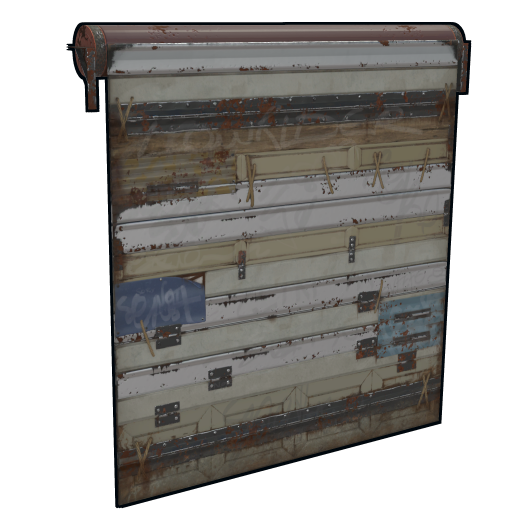 and lockable code lock
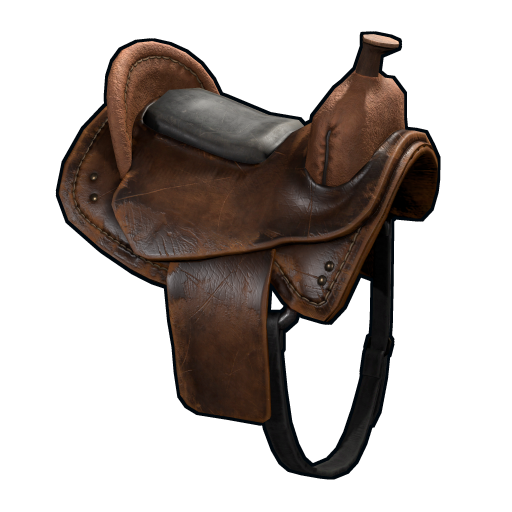
 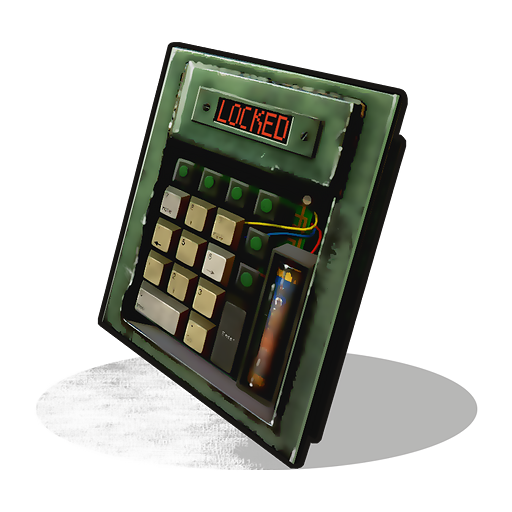 holds your minicopter or horse
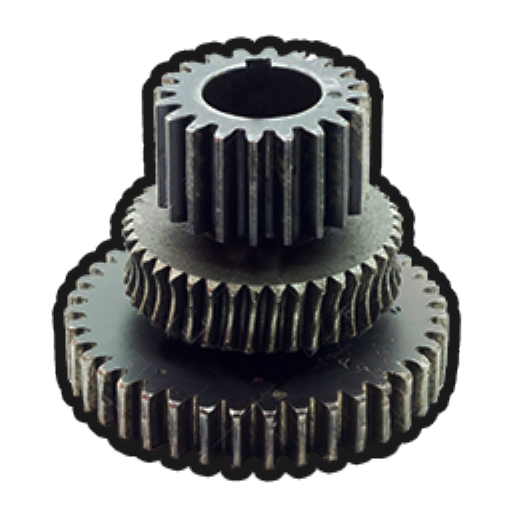
  without expanding the main raid surface. Cost: ~2,000 stone + 1 garage door (300 metal frags + 2 gears
  ).
).
External storage (boxes outside the main base) is for things you don't mind losing. Never put irreplaceable items in external boxes — boxes outside walls take environmental damage and any rando can break them with a rock  for 4,000 hits.
Putting it together: a recommended progression
Hour 0–1: 1x1 starter base, wood walls.
Hour 1–4: upgrade 1x1 to stone , place 2 small boxes, hide low-grade fuel.
Hour 4–8: build the 2x2 main base in stone, place TC , transition all loot.
Hour 8–24: upgrade core walls to sheet metal/armored, install first auto-turret , harden the bunker.
Day 2+: industrial network for passive smelt and craft (see 04_Industrial.md), greenhouse outbuilding (see 05_Horticulture.md).
This progression assumes solo. Duo cuts the times roughly in half; trio cuts again to about a third. Clan progression is parallel — the farmers farm while the builders build while the PvPer holds the front.
Common base-design mistakes
Most lost bases are lost to design errors, not to better raiders. The recurring ones:
- No honeycomb, or honeycomb only on one side. A raider always attacks the cheapest face. Partial honeycomb just tells them where to hit.
- Single-layer roofs over loot. The classic solo death: raiders ladder the roof and breach straight down into the loot room, skipping every door. Always double-layer the roof above loot and the core.
- Building too big for the group. Surface area is attack surface, and upkeep you cannot pay means a base that decays itself. A paid 2x2 beats a starving 4x4.
- Loot in the loot room, stash on the path. Irreplaceable items left in a door-accessible room are gone the moment the room falls. The stash belongs in the bunker.
- Foundations a raider can ladder or jump onto. A foundation flush with terrain or a rock lets raiders skip walls entirely. Raise or wall any reachable foundation edge.
- One auto-turret on a base too large to cover. Dead zones are where raiders set up. Cover the full perimeter or do not rely on turrets at all.
- External boxes holding real loot. Boxes outside the walls take environmental damage and break to a rock in a few thousand hits — anyone can take them.
- Freelancing an untested shape. A clever design with one overlooked soft wall is worse than a plain proven one. Build a known design.
Final pro tips
- Half-walls above doorways stop ladder-rush onto your second floor. Use them above every external door and embrasure.
- External TCs placed in fake outbuildings extend your no-build zone without putting real loot in those buildings. Cost: 1 cheap TC + 1 cheap building per location.
- Decoy bunkers — small empty 1x1s near your main base draw raid attempts away from the real loot. Worth it on high-pop servers.
- Triangle floor pieces as bunker doors cost less HQM than full doors and look like building, not like a door. Hide your soul stash behind one.
- Pick a known base design rather than freelancing. The 2x2 honeycombed solo, the 3x3 trio, the bunker compound — these are battle-tested for thousands of hours. RustBaseLab.com has hundreds of variations.
- Practice the build in a creative server before wipe. A base you can place from muscle memory is finished hours sooner — and the wipe-day hours are the ones you are most exposed.
- Soft-side awareness. Every wall has a hard exterior face and a soft interior face that takes ~50% more explosive damage. Orient walls so the soft side never points at an open approach a raider can stand in.
- Keep exterior all stone. Upkeep scales with what you place; armoring the sacrifice ring just burns HQM and daily upkeep for defense raiders ignore.
- Roof turret pods on external TC towers give peek-down angles into the compound courtyard, leaving raiders no safe hiding spot inside your walls.
- Always leave a rebuild kit — a hidden box with stone, doors, and a hammer outside the likely raid path — so you can re-wall the instant a raid ends.