Combat and PvP
Last updated: May 18, 2026
Most of this library covers stuff that happens between fights. This file covers the fights themselves — weapons, recoil, armor, and the tactical patterns that decide whether you live or die when bullets are flying.
Weapons reference
The full crafting cost / workbench / damage matrix.
Primary firearms
| Weapon | DMG (head/chest) | Range effective | Ammo | WB | Notes |
|---|---|---|---|---|---|
Eoka Pistol 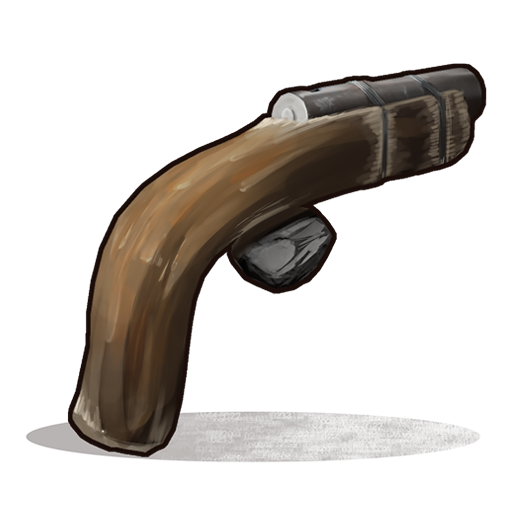 |
90/45 per pellet x4 | 5m | 12 gauge / handmade | 0 | 75 wood  + 30 frags + 30 frags  . RNG misfire. Wipe-day MVP . RNG misfire. Wipe-day MVP |
Waterpipe Shotgun 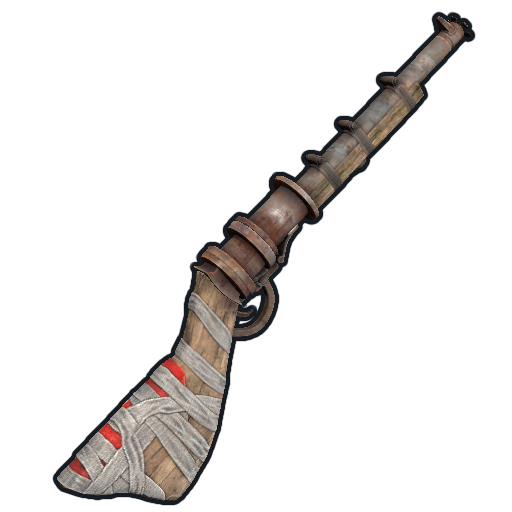 |
18/15 per pellet | 10m | 12 gauge / handmade / slug | 0 | 1 pipe + 30 wood + 125 frags . Slow reload |
Revolver 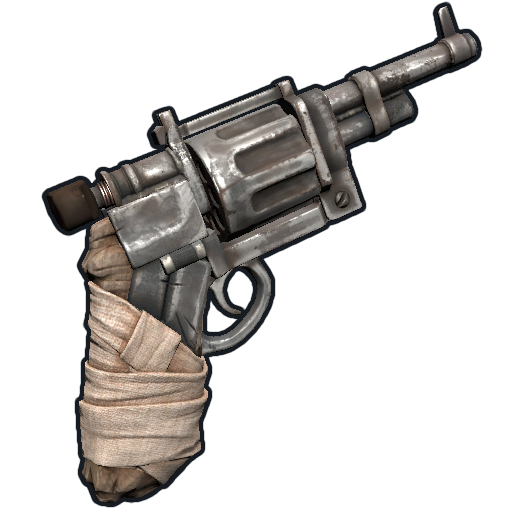 |
70 / 35 | 30m | Pistol | 1 | 8 rounds, slow but accurate |
| Double Barrel | 18 / 15 per pellet × 14 | 12m | 12 gauge | 1 | 2 shots, fastest reload of shotguns |
Pump Shotgun 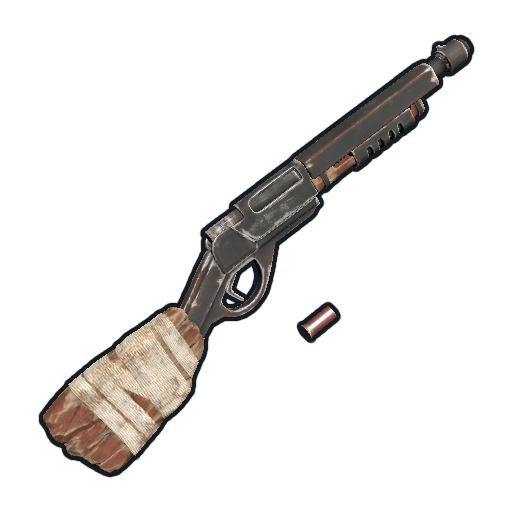 |
10.8/9 per pellet (handmade) | 15m | 12 gauge | 2 | 2 pipes + 15 HQM  + 1 spring + 1 spring  . 8 rounds . 8 rounds |
Custom SMG 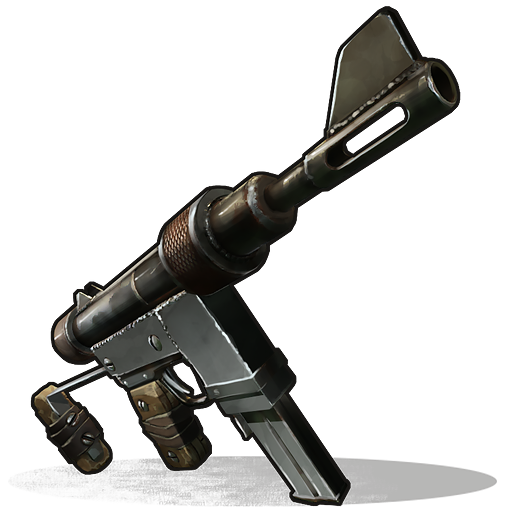 |
60 / 30 | 30m | Pistol | 2 | Cheap automatic, hipfire-friendly |
Thompson 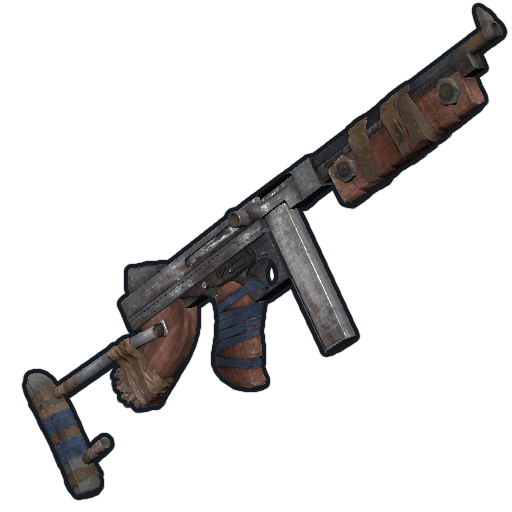 ("Tommy Gun") ("Tommy Gun") |
75 / 37.5 | 35m | Pistol | 2 | Mid-tier all-rounder. "Tommy Gun" is the same item (smg.thompson), not a separate weapon |
Semi-Auto Rifle 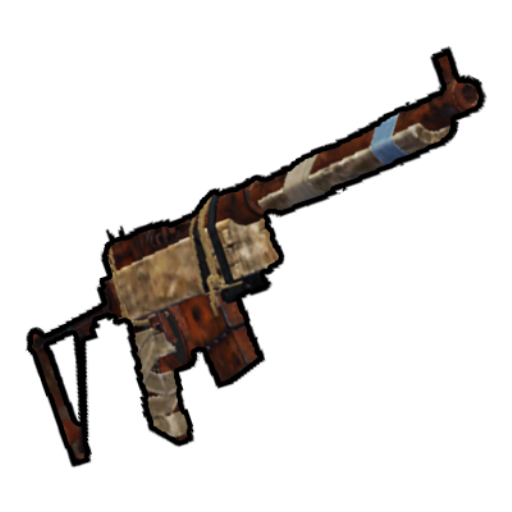 (SAR) (SAR) |
80 / 40 | 80m | 5.56 | 2 | 16 rounds, accurate semi |
Crossbow 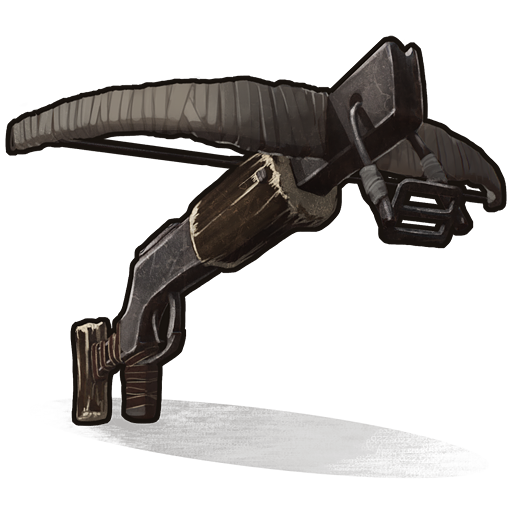 |
90 / 60 | 50m | Wood /bone/HV arrow 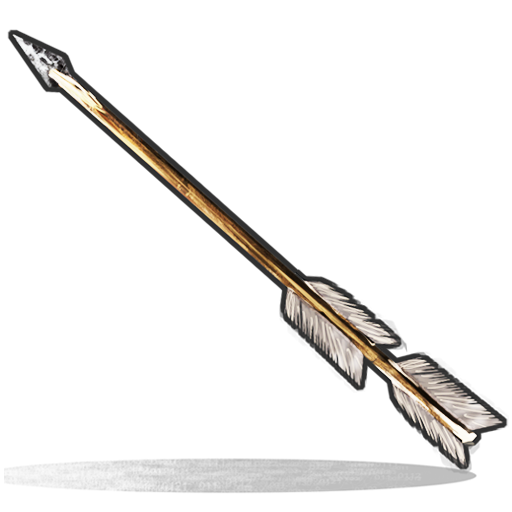 |
1 | One-shot to head with HV |
MP5 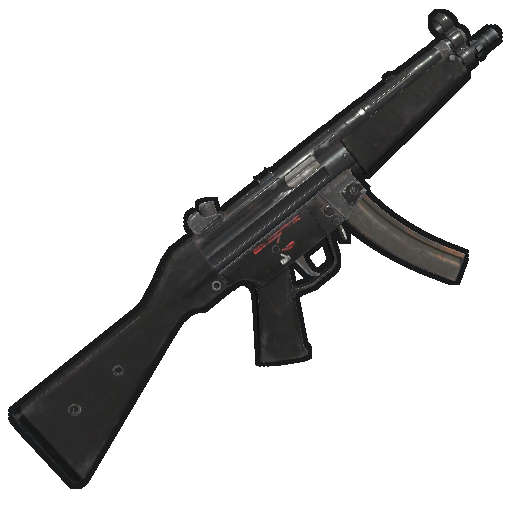 |
75/37.5 | 50m | Pistol | 3 | 1 SMG body 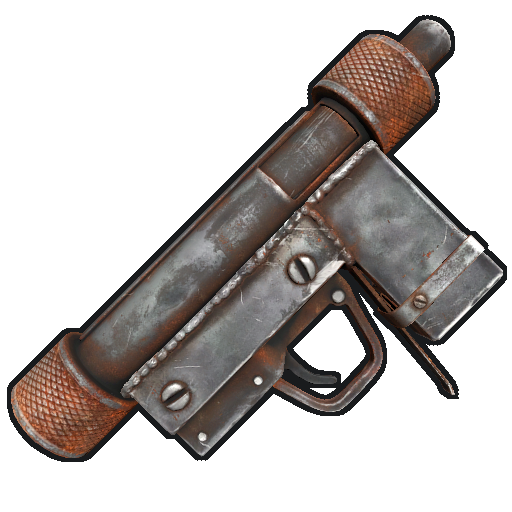 + 15 HQM + 2 springs . High RPM + 15 HQM + 2 springs . High RPM |
AK (Assault Rifle 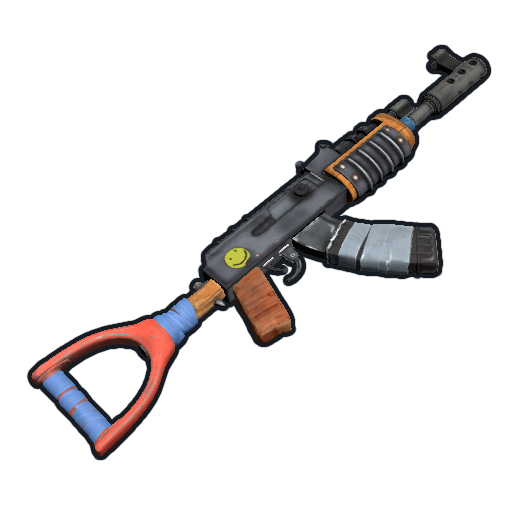 ) ) |
100/50 (50 base, 100 head w/ 2x mult) | 100m | 5.56 | 3 | 1 rifle body 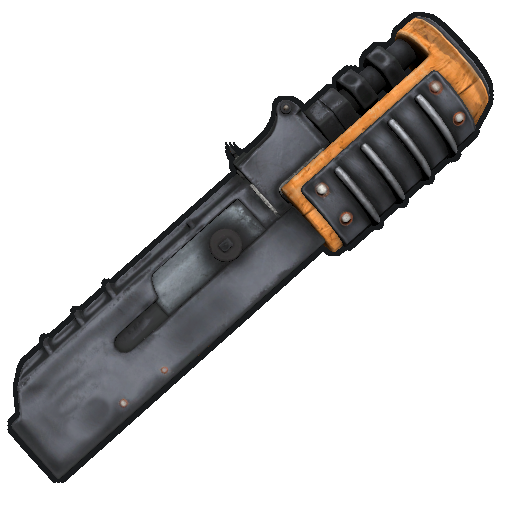 + 50 HQM + 200 wood + 4 springs . 30 round mag + 50 HQM + 200 wood + 4 springs . 30 round mag |
LR-300 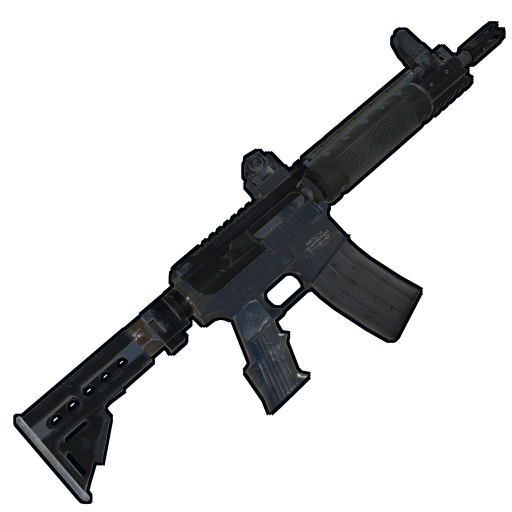 |
80/40 (40 base, 80 head w/ 2x mult) | 100m | 5.56 | LOOT ONLY | NOT CRAFTABLE. Lower recoil than AK |
| L96 (loot only) | 160 / 80 | 200m+ | 5.56 | n/a | Bolt-action sniper, 1-shot headshot |
M249 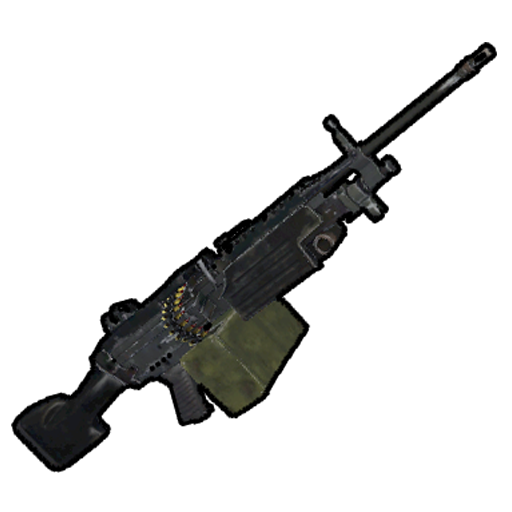 (loot only) (loot only) |
130 / 65 | 100m | 5.56 | n/a | 100 round belt. Loot only: Patrol Helicopter crates, Bradley APC crates, and the M249-wielding Heavy Scientists at Oil Rig. |
| Bolt-Action Rifle | 160/80 (80 base, 160 head w/ 2x mult) | 200m+ | 5.56 | 3 | 1 rifle body + 20 HQM + 3 pipes + 1 metal spring . 1-shot head |
| HMLMG | 57/28.5 | 100m | 5.56 | 3 | Craftable at WB3 (60 HQM + 1 Rifle Body + 2 Gears + 3 Metal Springs). Also drops from Elite crates, Hackable (Locked) crates, Helicopter crates, and Heavy Scientists. |
| M16A2 (loot only) | Lower per-shot than LR-300 | Mid-range | 5.56 | LOOT ONLY | NOT CRAFTABLE. Added June 2026. Fixed 3-round burst fire, 30-round 5.56 mag. Mid-range niche between SAR and LR-300. |
Damage modifiers
- Headshot multiplier: approximately 2x damage on all firearms
- Helmet damage reduction: metal facemask
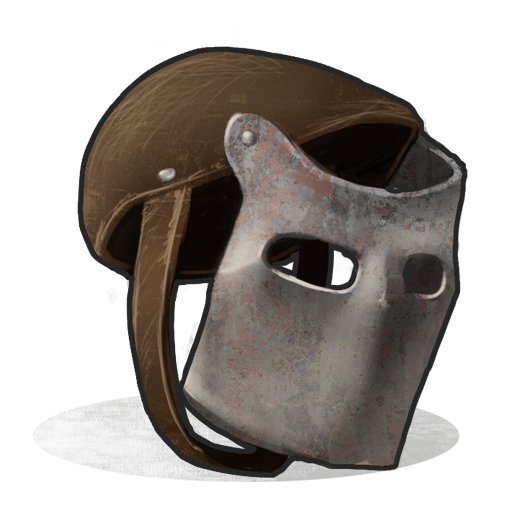 (50%), riot helmet (25%), coffee can (35%), bucket (20%), wood (15%)
 - Distance falloff: rifles maintain damage to ~100m, then degrade. SMGs degrade past 30m. Shotguns useless past 15m.
- Limb shots: ~75% of body damage (legs/arms)
Recoil patterns
Every Rust firearm has a deterministic recoil pattern layered with a small random aim cone. Memorising the opening pattern of the AK and LR is the single biggest skill jump in the game — their first burst is identical every spray.
AK-47 spray pattern (30 rounds)
Rounds 1-4: controllable vertical kick. Pull mouse straight down. Rounds 5-6: vertical continues with slight horizontal start. Rounds 7+: the deterministic pattern continues but aim cone and bloom dominate — rounds spread around the pattern point rather than landing on it, so you compensate with visible feedback, not pure muscle memory.
Key insight: The 2022 Combat Update is still in effect through 2026 — the AK recoil pattern itself is fixed and learnable, but an aim cone is layered on top that widens with sustained fire. The opening 4-6 rounds land tight on the pattern; past that bloom takes over. Crouch-burst the first 4-6 rounds, reset, peek, repeat — this beats holding the trigger at all ranges past 25m.
LR-300 spray pattern
Lower magnitude than AK across the whole pattern. Approximately: Rounds 1-10: vertical climb, easier to control than AK. Rounds 11-20: minor horizontal drift right. Rounds 21-30: slight scatter, still very controllable.
The LR is the "easy AK" — slightly less damage but the pattern is forgiving enough that an average player will out-aim a same-skill AK user past round 10.
MP5 / Thompson / Custom SMG patterns
Pistol-ammo SMGs have lower per-round recoil. Patterns climb mostly straight up with mild left-right wobble. Most players can hold the trigger and stay on-target at close range.
Practicing recoil
The community uses No Recoil Aim Practice servers and Aim Train modded servers to learn patterns. 30 minutes of practice on Bayfield or a similar aim server is worth more than 10 hours of in-game spray-and-pray.
Armor system
| Piece | Slot | Protection | Cost | Workbench |
|---|---|---|---|---|
| Burlap top/legs/headwrap | 3 slots | Negligible | Cheap | 0 |
| Bone armor | Chest/legs | 25% kinetic | Bones + cloth 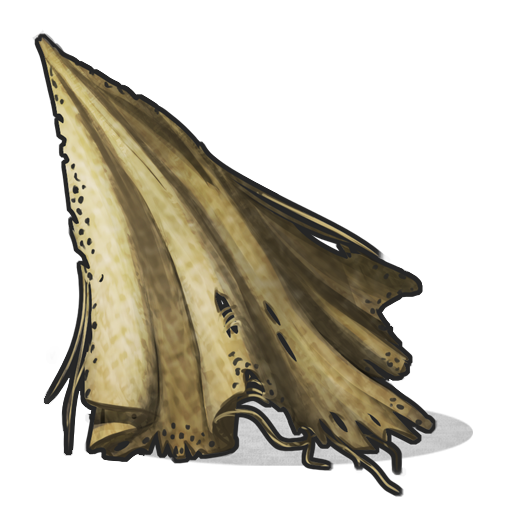 |
0 |
| Wood armor |
Chest/helmet | 30% kinetic | Wood |
0 |
Roadsign jacket 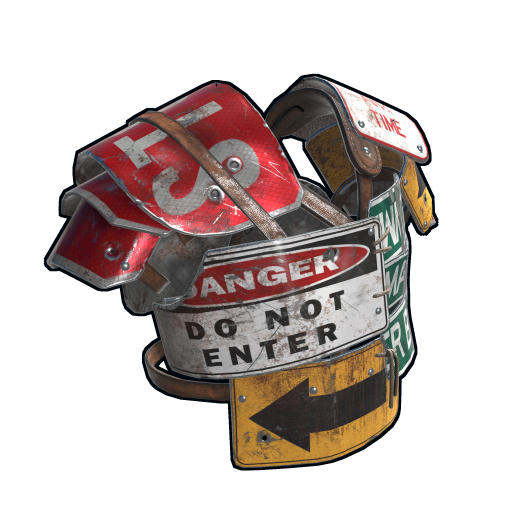 + kilt + kilt |
2 slots | 50% kinetic | Roadsigns | 1 |
| Metal chestplate + facemask | 2 slots | 70% kinetic | HQM |
2 |
Hazmat suit 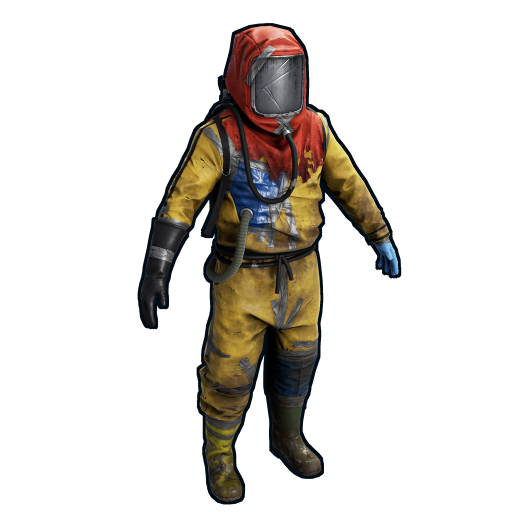 (full body) (full body) |
4 slots | 35% kinetic + 50% rad | Cloth + plastic |
2 |
| Heavy Plate (full set) | 4 slots | 85% kinetic | HQM + sheet metal |
3 |
| Ballistic Armor (BDU) | Full set | Comparable to metal armor with armor plate inserts | LOOT ONLY (added June 2026) | n/a |
Armor inserts (Crafting Update, March 2025): player-crafted armor can now roll 0–3 armor slots that take craftable inserts, stacking extra bonuses onto the base piece. The table above is the slotless baseline; the full breakdown lives in Combat Math: armor inserts.
August 2026 ("Power Trip") clothing/armor tweaks: the Bucket Helmet now costs 20 metal frags (down from 35) and got a small buff to projectile and bite protection; the Collared Shirt got a small buff to radiation and projectile protection; and the Snow Jacket got a sizable buff to bite and cold protection (much better in the arctic). Exact new protection values weren't published in the devblog. Same patch, on the weapon side: the Blowpipe now costs 10 cloth (down from 25) and the Wooden Dart now does 50 damage (up from 40).
Loadout recommendations
Wipe day naked (hours 0-2): Bone helmet + bone armor. Stops a few low-tier shots.
Stone  -tier base (hours 2-6): Wood chestplate + coffee can helmet
 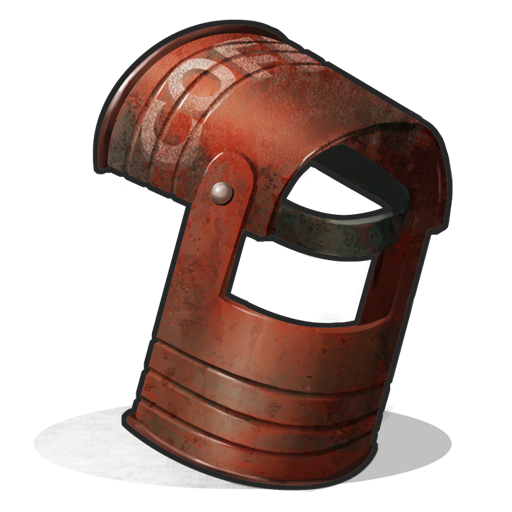 . Affordable defense.
Sheet metal tier (hours 6-12): Roadsign jacket + roadsign kilt 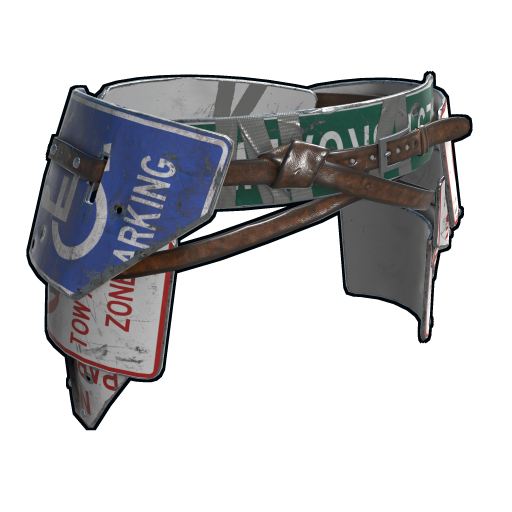 + coffee can helmet . The classic mid-tier kit.
Endgame solo: Metal facemask + metal chestplate + roadsign kilt . Best mix of head protection and mobility.
Endgame raid loadout: Heavy plate full set. Slow and clunky but tanks rockets 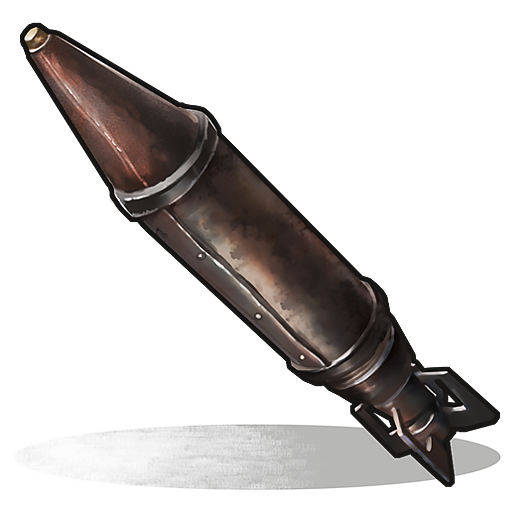 . For raiders standing on C4
 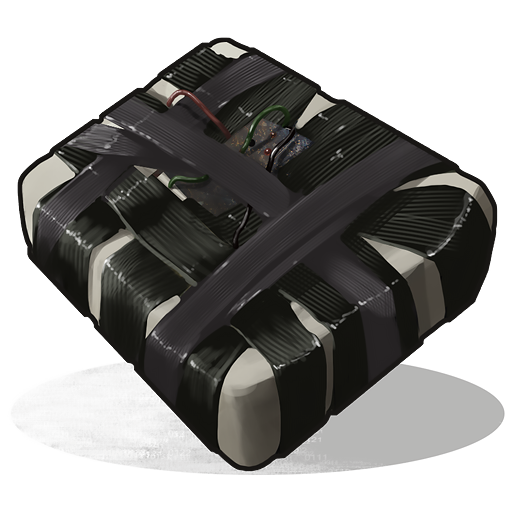 , not for runners.
Hazmat: Always carry one for monument runs. Mandatory for Power Plant, Launch Site, Train Tunnels.
Combat shields
Shields landed with the Primitive update (February 6, 2025) and are standard kit in both the Primitive game mode and vanilla. A shield sits in your backpack slot and only works alongside a compatible single-handed weapon. Facepunch's rule: "items that are compatible with shields will mention this on their item information panel when selected." If the panel is silent, the pairing does not work.
There are three variants (wooden, reinforced wooden and metal), "each with a different damage block amount." That amount is the percentage of any incoming attack the shield absorbs; the remainder still reaches you. Facepunch did not publish the per-variant percentages in the devblog, so test the difference yourself before betting a kit on it. Craft costs: Wooden Shield 250 wood + 20 cloth (default blueprint); Reinforced Wooden Shield 200 wood + 1 road sign + 10 cloth (Workbench Level 1); Metal Shield 300 metal frags + 10 leather + 50 cloth (Workbench Level 2). A fourth variant, the Improvised Shield, is loot only and not craftable.
Blocking is a commitment. Holding RMB raises the shield: more protection at the cost of reduced visibility and no sprinting. The shield takes over RMB entirely, so no aiming down sights and no throwing weapons while it is equipped. You can only keep it raised for 4 seconds before it drops, tracked by a progress bar near the crosshair. The shield also has its own durability bar above your health bar; every hit it absorbs chips that bar, and when it breaks the shield auto-unequips. Lowered, it rides on your back and protects nothing.
| Mechanic | Rule |
|---|---|
| Slot | Backpack slot; visible on your back when lowered (no protection) |
| Pairing | Single-handed weapons only; compatibility flagged on the item info panel |
| Raise | Hold RMB; no sprint, reduced visibility while up |
| Hold limit | 4 seconds per raise, shown on a bar near the crosshair |
| Block | Absorbs a set percentage of incoming damage; three variants, each with a different block amount |
| Durability | Separate bar above health; breaks and auto-unequips at zero |
Fighting against one: work the clock and the angles. Count the 4-second raise and punish the drop. Flank, since a shield handles frontal threats. Kite a raised shield, because the carrier cannot sprint. Remember every blocked shot still shreds the shield's durability, and a shield user is stuck on single-handed weapons at ranges where you can bring a rifle.
Handcuffs and prisoner hoods
The Road Renegades update (July 4, 2024) added a proper prisoner pipeline. You can only cuff a player who is surrendering (the friendly gesture) or downed, so wound them or talk them into hands-up first.
What cuffs and hoods do
A cuffed player loses inventory, belt, use and interact. You can move them around on foot and force them into vehicles and other mountables, which makes clean escorts possible. Add a prisoner hood and they also lose vision and map access, so they cannot tell where they are being taken or call the route to teammates. Craft costs: Handcuffs 70 metal frags (Workbench Level 2); Prisoner Hood 20 cloth (Workbench Level 1).
Getting out of cuffs
Hold the attack button to work the unlock minigame and fill the progress bar. Taking damage or being pushed interrupts the attempt, so an attentive captor can keep resetting you. Escape progress is tied to the handcuffs' item condition, and Facepunch designed it "so that you can always eventually get free": no permanent captivity. One wrinkle worth knowing: performing the friendly gesture at any time lets other players inspect your full inventory and modify your belt. That is how you prove you are unarmed, and how a captor strips you before the cuffs go on.
Combat positioning
Peeking
A peek is exposing yourself to fire just long enough to take a shot. Three peek types:
- Strafe peek — slide left or right to expose, shoot, slide back. Most common.
- Crouch peek — crouch to lower hitbox, expose, shoot. Works well at corners.
- Jump peek — jump to gather info, your hitbox moves erratically. Bait peeks; don't shoot mid-jump.
Always peek from a different angle than the enemy expects. If they're shooting at the right side of a doorway, peek from the left.
Crossfire mechanics
When two players move on an enemy from two angles, the enemy can only face one. The off-angle player gets a free first shot. Co-ordinate with teammates: one engages from the front, the other flanks.
Cover discipline
Use stone and metal walls for hard cover. Wood walls (250 HP) absorb plenty of rifle rounds before breaking — they are real cover for the duration of a fight, just don't live behind them. Twig is the useless one — one rock-hit and it's gone. When you get fired on in the open, drop a Wooden Barricade — it has 250 HP, costs 300 wood and a rope, and deploys instantly. Two of them stacked turn a death trap into a fight.
Sound
Footsteps, gun reloads, eating, crafting, opening doors — all audible. Use:
- Crouch-walk to silence footsteps
- Hold sprint key only when you accept the noise
- Listen at corners for enemy steps, reloads
- Avoid eating mid-fight (the chomping audio is loud)
Specific combat scenarios
1v1 at distance (50m+)
Use the SAR or Bolt. Crouch for accuracy. Aim for the head; body shots take 3+ to drop a metal-armored target.
1v1 at mid-range (15-50m)
AK or LR controlled bursts of 5-7 rounds. Reset recoil between bursts. Aim chest, drag mouse up for head.
1v1 close (under 15m)
SMG or shotgun. Hipfire is viable. Strafe to make their aim harder. If you have a shotgun, single-tap them — pump shotgun headshot is one-tap unarmored, two-tap helmeted.
Defending a base
Embrasure windows are your friend. Pre-position behind embrasures with line-of-sight to your front door. Use auto-turrets 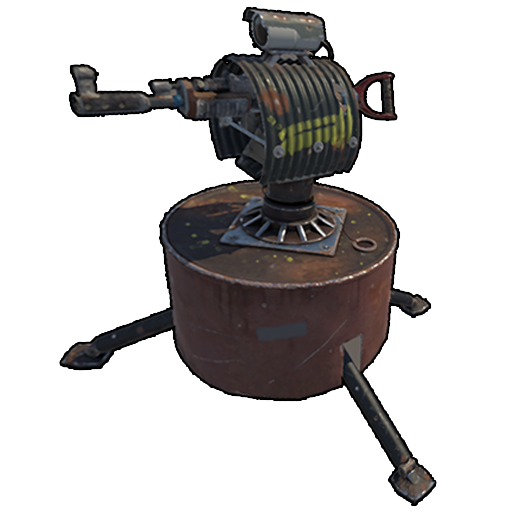 to suppress while you flank.
Raid response
If you log in to a raid in progress, do NOT push the C4 -er directly. Instead:
- Find a peek angle on the raid hole
- Spray short bursts to force the raider off the C4
- Move repeatedly between peeks — never stay at the same window
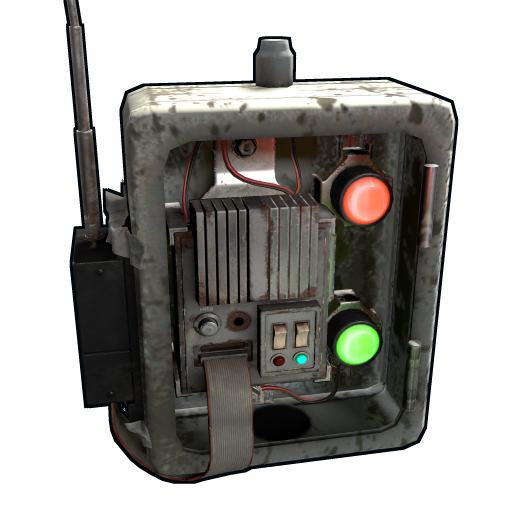
- If you have a turret nearby, arm it remotely via Rust+ smart switch
Bag rush
After death, respawn at a forward sleeping bag 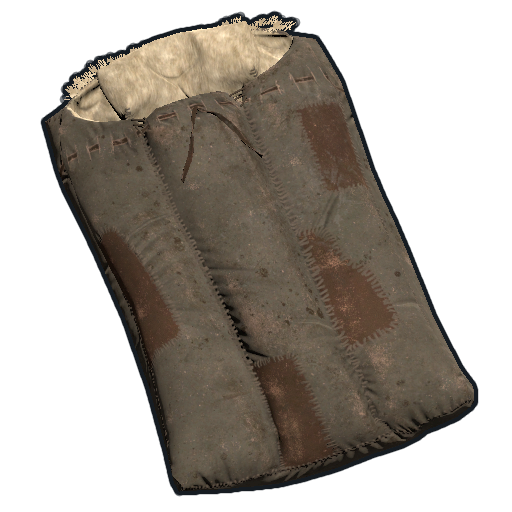 (closer to your gear). Grab your loot before the killer reaches it. Bring spare gear in a hidden cache near common death spots.
Group tactics
Roles
- Front-line — primary firepower, AK / LR / MP5 , full metal kit. Pushes objectives.
- Sniper — Bolt or L96, holds high ground, picks targets, calls out positions.
- Support — heals, repairs armor, hauls extra ammo, plays backline.
Calling targets
Use voice chat or in-game callouts. "Two pushing from the north door." "One injured on the rock  ." Avoid generic "they're there" — be specific.
Pushing in pairs
Never push solo into unknown territory. Pairs let one player commit while the other holds. Solos die to crossfires.
Defending a raid as a group
One person defends the breach, two roam the base flanking, one stays high with a sniper. Don't all funnel to the same window — that's a free splash kill for a single rocket .
Crafting cheat sheet for combat
| Item | WB | Cost |
|---|---|---|
Bandage 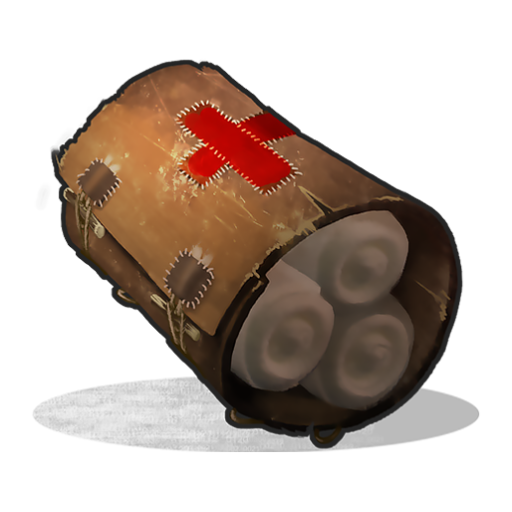 |
— | 4 cloth |
Medical Syringe 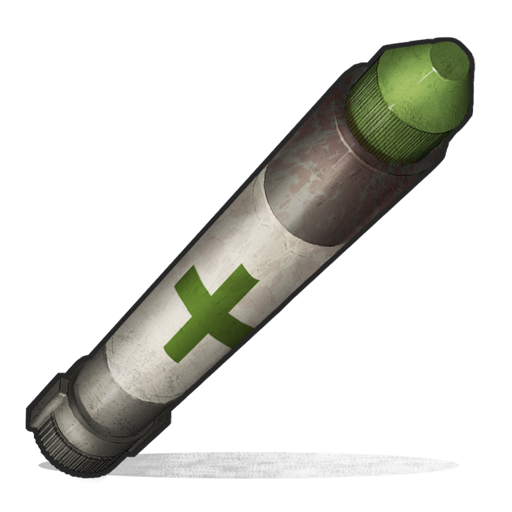 |
— | 15 cloth + 10 metal fragments + 10 low grade fuel |
Large Medkit  |
— | 2 medical syringes + 10 low grade fuel |
5.56 Rifle Ammo 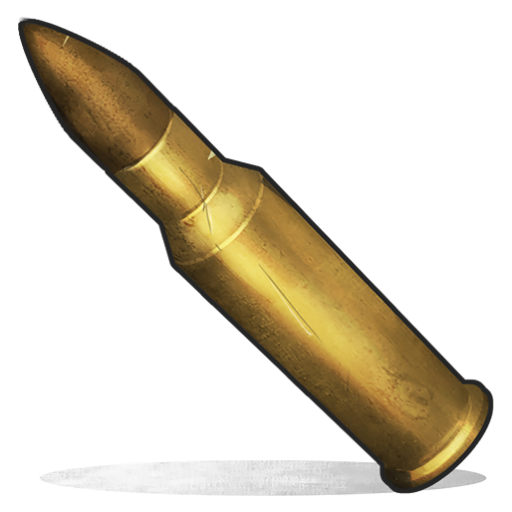 (x10) (x10) |
2 | 10 frags + 5 gunpowder  per round per round |
| 5.56 HV Ammo (x10) | 3 | More gunpowder , faster bullet velocity |
| 5.56 Explosive Ammo (x2) | 3 | 10 frags + 20 gunpowder + 10 sulfur  per 2 rounds (≈25 sulfur per round all-in) per 2 rounds (≈25 sulfur per round all-in) |
| 12 Gauge Shell | 1 | 10 frags + 20 gunpowder per shell |
| Handmade Shell | 1 | Wood + gunpowder (cheap, weak) |
Pistol Ammo  |
1 | 10 frags + 5 gunpowder per round |
Pro tips
- AK headshot at 100m kills any unhelmeted target. Practice aim train daily.
- Reload behind cover, ALWAYS. Out-of-ammo mid-fight is the most common death cause.
- Pre-position bandages on a hotkey (slot 4 typical). Use them mid-fight if you have a brief safe window.
- Bring your best gear on a raid. Raids are high-stakes and the difference between full metal and mid-tier kit decides fights. Keep a backup kit at home so dying never freezes you — gear fear loses more raids than under-gearing prevents.
- Sound whore. Listen for footsteps, gunshots, opening doors. Information beats reflex.
- Sleep with full armor near a bag, never stripped. If raided, you wake into action.
- Hold corners with crouch. Lower hitbox, harder to hit headshot.
- Practice the AK pattern in single-player aim training maps. 20 minutes a day, 2 weeks, you'll be top 10% of the server.
- Bind voice chat to a separate key. Push-to-talk reduces background noise so teammates hear you clearly.
- Don't engage if you don't have to. Especially solo — if the fight isn't winnable, run.
Common combat mistakes
- Holding the trigger past 10 rounds without compensating recoil. Spray goes wild after that.
- Engaging multiple enemies at once with no cover. You'll die before reloading.
- Not having a backup kit at home. A second kit ready in your loot room means dying is a respawn, not a wipe-ender. The real mistake is playing scared in the kit you have — fight in your gear, don't hoard it.
- Standing still mid-fight. Strafe constantly. A moving target is much harder to hit.
- Hipfire at distance. Hipfire is for under-10m only.
- Not pre-aiming. When approaching a corner, your crosshair should already be at head height.
- Forgetting to repair armor. Damaged armor offers less protection. Repair at workbench when below 50%.
- Engaging from the same window twice in a row. Move after every peek-shot. Predictability = death.
The engagement decision — should you fight at all?
The most important combat skill in Rust is not aim — it is knowing which fights to take. Every engagement is a wager: you stake your kit, your loot and your time against an uncertain reward. Before the first shot, run a fast mental checklist:
- What do they have, what do I have? A gear advantage (you in metal and an AK, them in hide and a bow) makes the fight worth taking. A gear deficit usually does not — running costs you nothing but pride.
- How many of them? Solo against a group with no cover or angle advantage is a coin-flip at best. Outnumbered, you need terrain, an escape route, or surprise — ideally all three.
- What is at stake? Carrying a full raid kit or a wipe's worth of loot? Decline marginal fights. Carrying nothing? You are free to be aggressive and gather information.
- Who else can hear this? Gunfire draws third parties. A fight you would win 1v1 becomes a loss when a roaming duo arrives mid-reload. On a populated server, factor the third-party risk into every engagement.
The meta player's instinct: most fights are not worth taking, and disengaging is a skill, not a failure. Picking only favourable fights compounds over a wipe into a steady gear and loot lead, while players who fight everything bleed kits to bad trades.
Advanced movement — manipulating your hitbox
Rust combat is decided as much by how hard you are to hit as by how well you shoot. Your character has a real, location-specific hitbox, and every movement input changes its size, shape and predictability.
- Strafe inversion. Sprinting in a straight line, or strafing in a steady rhythm, lets the enemy lead you perfectly. Break the pattern — change direction at irregular intervals so their lead is always wrong. Predictable movement is the same as standing still.
- Crouch-spam during exchanges. Crouching shrinks your hitbox and drops your head out of a pre-aimed crosshair, but it slows you. The technique is to crouch as you fire and stand to reposition between bursts, so you are small while exposed and fast while moving.
- Lean (Q/E) to expose less. Peeking around a corner with a lean shows only a sliver of your body while keeping most of it behind hard cover. Combined with a crouch, a lean-peek exposes a fraction of your hitbox — the defender's dream, the attacker's nightmare.
- Never fight airborne. Jumping removes your ability to strafe, locks your trajectory, and makes you a predictable arc. Jump-peeking is a dead technique — a stationary parabola is the easiest possible target.
The principle behind all of it: every fraction of a second you are visible, be as small and as unpredictable as possible. Good movement does not win fights outright, but it converts enemy hits into misses, and in a game where two AK headshots end you, forcing two misses is often the whole margin.
Peeking theory — winning the exposure war
A "peek" is any moment you expose yourself to an angle. Combat at range is a series of peeks, and the player who controls the timing and information of those peeks usually wins. The core techniques:
- Jiggle peek — a 0.2-second strafe-and-return that exposes you just long enough to spot the enemy without giving them time to aim and fire. Use it to gather information: where are they, are they scoped, are they pre-aiming your angle.
- Wide peek — committing fully to an angle with your gun already shouldered. Only do this once you know where the target is and you have the first-shot advantage. A wide peek into the unknown is how you die to a pre-fire.
- Off-angle — peeking from a spot the enemy is not expecting (a different window, a slightly elevated position) so their pre-aimed crosshair is on empty air when you appear.
- Re-peek discipline — never peek the same angle twice in a row at the same height. The enemy's crosshair is already there. Shift position, change height, or wait out their patience.
The deeper idea is the peeker's advantage: because you choose when to appear, you see the enemy a fraction of a second before they react. Exploit it by always peeking with the gun up and ready to fire, and you convert that fraction of a second into the first clean burst — which, as the damage math shows, usually decides the fight.
The gear-fear economy
"Gear fear" is the hesitation that creeps in when you are carrying valuable kit, and it is one of the most-exploited weaknesses in Rust PvP. A player afraid to lose their loadout peeks slower, commits less, and disengages from fights they would otherwise win — which, ironically, gets them killed more often. The meta solution is structural, not psychological:
- Keep a backup kit at home. If a death costs you a full set you have a spare of, the fear evaporates and you play at full aggression.
- Match the kit to the task. Roaming to fight? Wear mid-tier metal you can replace. Doing a high-value raid run? Accept that you may need to play passively, or split the valuable cargo across teammates.
- Bank your loot before the risky fight. Drop excess components and resources at base before a roam. You cannot lose what you are not carrying, and a lighter player commits to fights with a clear head.
The flip side is offensive: read gear fear in your opponent. A player who peeks once, sees you, and refuses to re-peek is telling you they are carrying loot they cannot afford to lose. Pressure them — push the angle, force the fight on your terms, and their hesitation becomes your kill.
Information warfare — fighting what you cannot see
Rust gives away enormous information through sound and sight, and the player who collects more of it fights with a map in their head while their opponent fights blind. Build the habit of reading these signals:
- Sound — footsteps reveal direction, distance and surface; gunshots reveal weapon type and rough range; a door opening or a building-plan placement reveals an enemy's intentions before you ever see them. Play with footstep audio prioritised and treat every sound as a data point.
- Tracers and muzzle flash — every shot a player fires draws a line straight back to their position. After an enemy fires, you know exactly where they were; if they have not moved, you know exactly where they are.
- Visual tells — fresh corpses, dropped loot bags, open doors, smoke from a campfire, and the direction of recent building damage all narrate what happened here minutes ago.
- Denying information — the same rules work in reverse. Move after firing so your tracer is stale, suppress your own footstep noise by walking when stealth matters, and never silhouette yourself on a skyline.
The meta mindset is to treat combat as an information race. You rarely lose a fight you saw coming; you almost always lose a fight that surprised you. Out-collecting your opponent on sound and sight means you take fights on your terms, with the first peek, the first shot, and the first kill.