Raiding (Offensive)
Last updated: May 18, 2026
Defending raids is covered in 01_Building.md and 02_Base_Designs.md. This file is the other side: how to be the raider. Scouting, costing the raid, executing, and getting out alive with the loot.
Should you raid this base?
Before spending a single C4 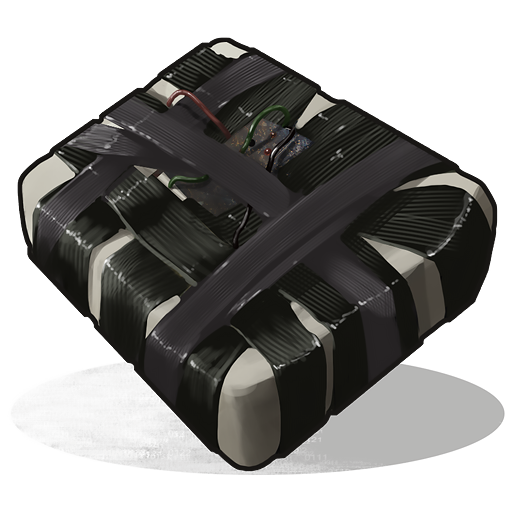 , ask:
- Is the loot worth the explosives? A 1x1 stash holds maybe 500 scrap
 and basic components. Costs you 1-2 rockets
 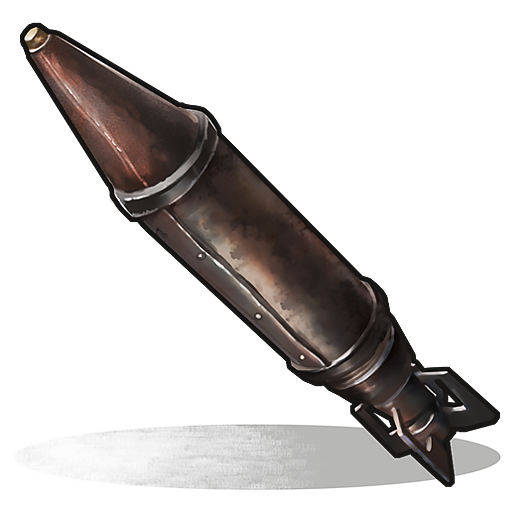 . Marginal. A 2x2 with industrial setup holds 10k+ scrap , components, guns. Worth a real raid kit.
 - Is the base offline? Online raids are 3x harder. Check around the base for sleeping bodies, smoke from furnaces
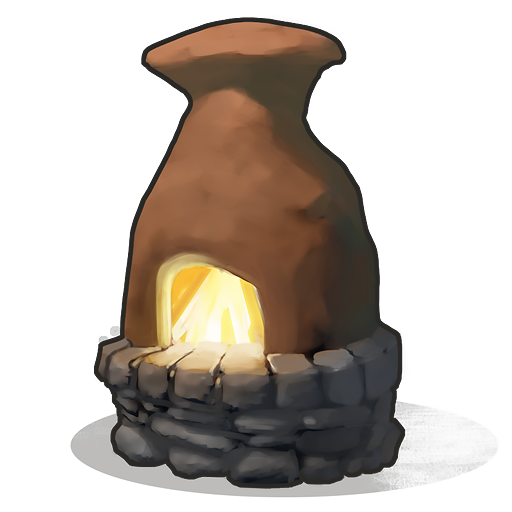 , recent activity sounds.
 - What's the layered defense? Auto-turrets
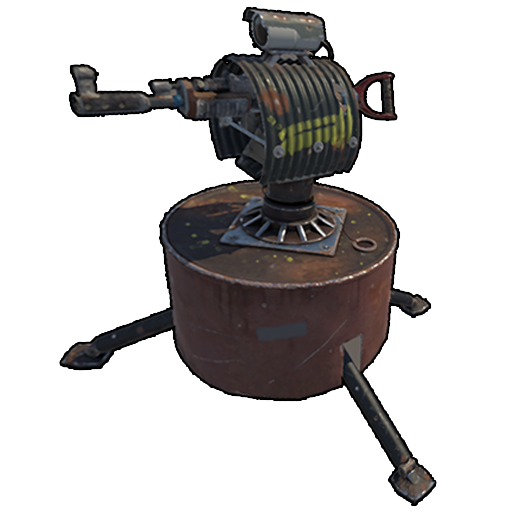 , embrasures, shotgun traps, SAM site
 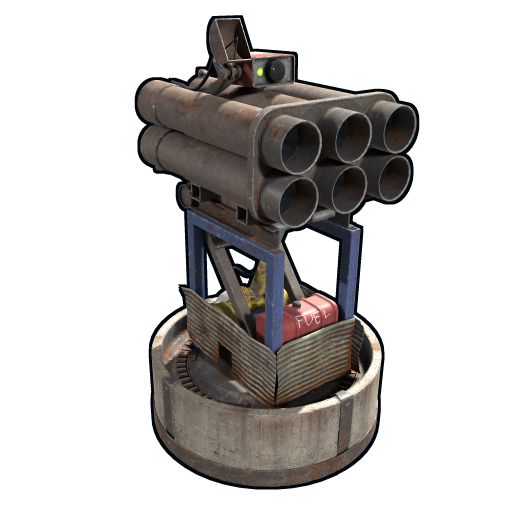 — every one of those adds cost and risk.
 - Can someone counter
 -raid you while you're stuck on this base? If you live next door to a clan, raiding mid-pop means inviting reprisal.
If yes-yes-no-no, raid. If any are uncertain, scout more first.
Scouting
The pre-raid intel pass. Do not skip this.
Walk the base perimeter at night with cover. Note:
- Where's the front door (where they enter)?
- Is the TC
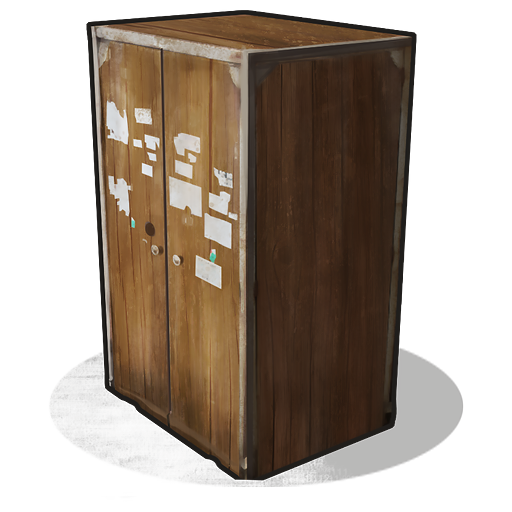 visible? (Some bases have a glass-walled TC room visible from outside.)
 - Are there auto-turrets ? Where are they aimed?
- How many honeycomb layers visible? Count walls between exterior and where loot likely is.
- Vehicle bay external? Garage door
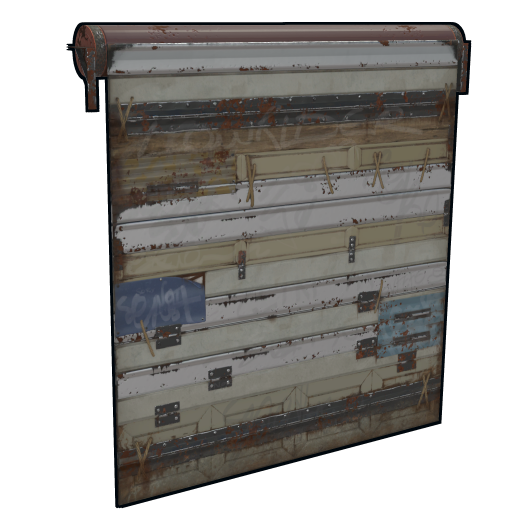 ?
? - Sleeping bag
 exposure (any beds
  you can see through embrasures)?
Watch from a distance during day for 30 minutes:
- Player count online?
- Loot run frequency (people leaving and returning)?
- Any cargo runs, monument runs in progress?
- Tea brewing visible (smoke from greenhouse)?
Use a minicopter for aerial recon if you have one. Be quiet — engine sound carries.
Raid math (cost to breach)
See 10_Cheatsheets.md for the full table. Quick reference:
| Wall | Soft side (the GOOD path) | Hard side |
|---|---|---|
Stone  |
1 C4 (~2,200 sulfur  ) or 4 rockets (~5,600) ) or 4 rockets (~5,600) |
1 C4 (~2,200) or 4 rockets (~5,600) |
| Sheet Metal | 2 C4 (~4,400) |
2 C4 (~4,400) |
| Armored | 15 rockets (~21,000) |
15 rockets hard (~21,000) |
Sheet Metal Door 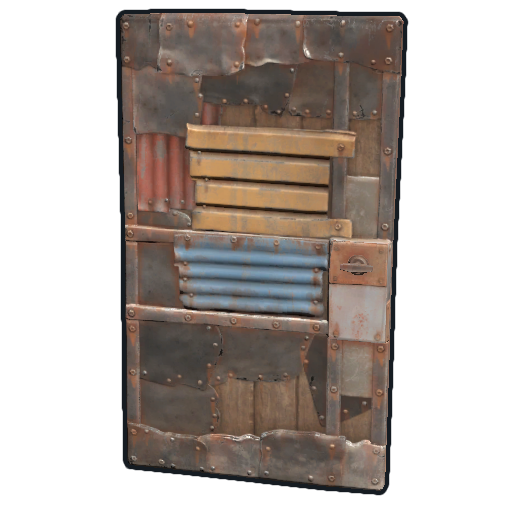 |
1 C4 |
1 C4 (doors have no soft side) |
Armored Door 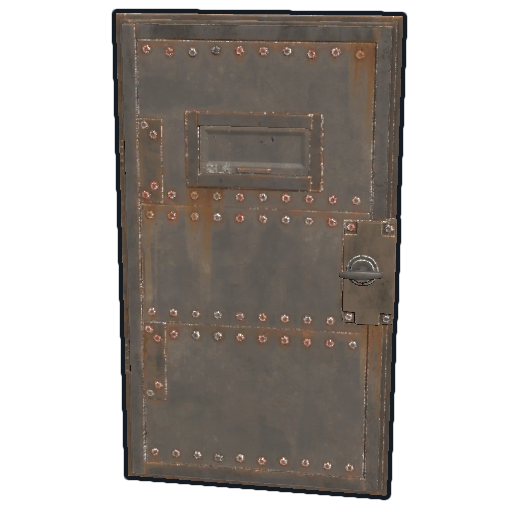 |
2 C4 |
2 C4 (doors have no soft side) |
| Garage Door |
3 C4 |
3 C4 (doors have no soft side) |
Always go soft-side. The soft side is the wood  -frame-visible side. Inside a base, soft sides face outward of every wall (because the defender's hard side faces in). When raiding from outside in, you'll be on the hard side of each layer. Plan to go around if possible — look for windows / weak spots.
Tools of the trade
Explosives
| Item | Damage (community-measured) | Best for |
|---|---|---|
Beancan Grenade 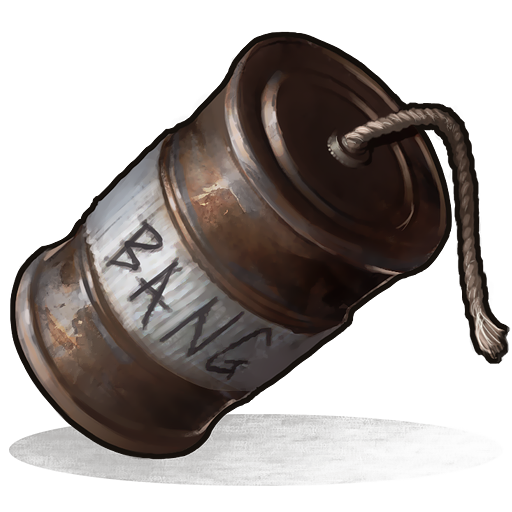 |
200 hard side / 400 soft side | Wood walls, twig, weak doors. Cheap. RNG fuse  . . |
Satchel Charge 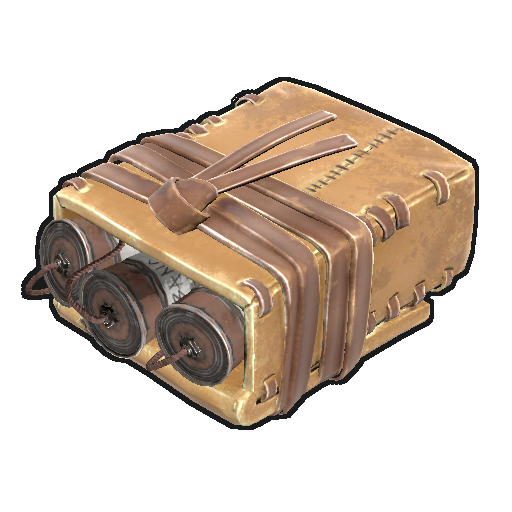 |
240 hard / 480 soft | Wood walls, sheet metal doors . RNG fuse . |
| Rocket |
236 hard / 472 soft (wall) | Sheet metal walls and beyond, structural raiding |
| C4 (Timed Explosive ) |
275 hard / 550 soft (wall) | The gold standard for any serious raid |
HE 5.56 Ammo 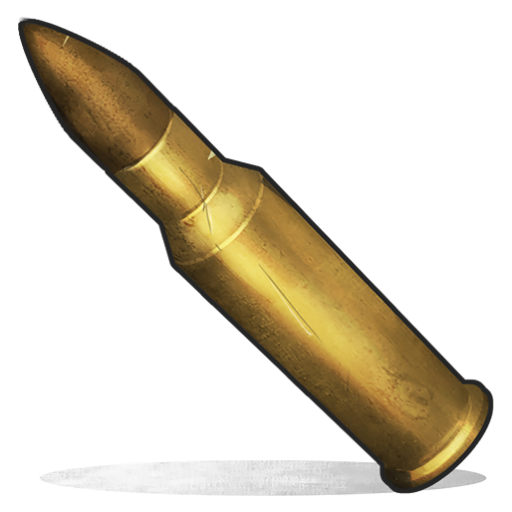 |
6 per round | Soft soak large quantities, slow |
Explosive Crossbow 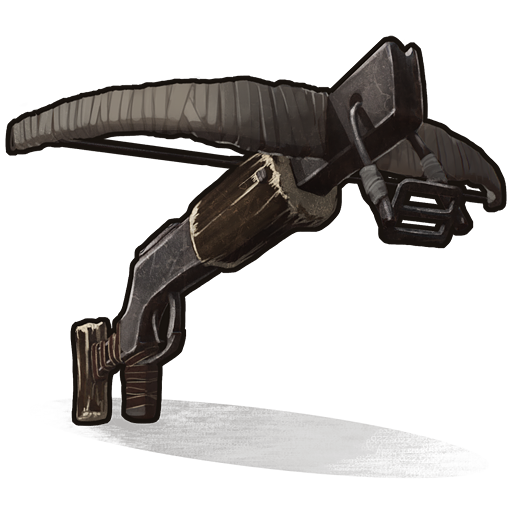 Bolt Bolt |
Mid | Cheap surprise, low total damage |
| Mortar (May 2026) | High AoE | Wide clan compounds, not 2x2s |
Raid Kit (typical 2x2 stone raid)
- 6-8 C4 (covers full breach + bunker)
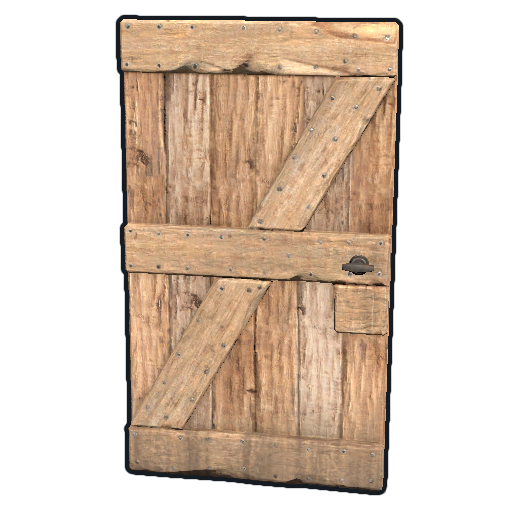
- 2-4 satchels (cheap soak on outer wood doors
 )
) - 1 hammer
 (replace doors after raid)
 - 1 sheet metal door (replace TC door)
- Hazmat suit
 (for radiation if base near a monument)
 - 200 bandages
 and 5 large medkits
  (for counter -raid defense)
 - Backup AK + 200 rounds + spare armor
Raid Tower
A vertical pillar of foundation+wall blocks built next to the base, giving you a sniper / shooting platform. Built fast from twig, upgraded to stone if you need it to last.
Build cost: ~500 wood for a 5-foundation-tall tower.
Use case: rooftop access on tall bases, sniper position on clan compounds.
Siege weapons — the primitive raid arsenal (2025)
The Primitive update (February 6, 2025) added four siege weapons that raid on wood, metal fragments and HQM instead of sulfur. Each crafts as a package, gets deployed in the open, and is finished on-site with extra materials and a hammer. Horses (overhauled in the same patch) tow the catapult, ballista and siege tower into position.
Battering Ram 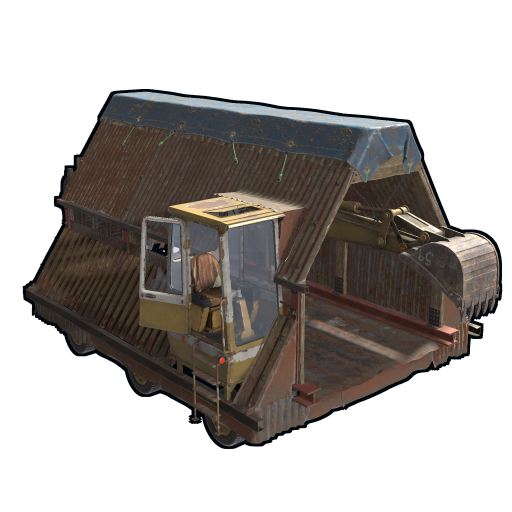 — a fuel-powered vehicle you actually drive. Its reinforced arm smashes wooden and stone constructions — sheet metal and armored cores stay explosive territory. The ram damages itself with every hit and must be repaired with high-quality metal to stay operational, so budget HQM for the arm, not just the 100 HQM craft cost. Facepunch hasn't published per-hit damage numbers on the wiki — plan for multiple swings per stone wall and repairs mid-raid.
Catapult  — lobbed area damage with four ammo types: Scattershot (a spread of rocks — anti-player), Firebomb (ignites on impact, spreading flames), Propane Explosive Bomb (the raiding round — high damage, hurts construction) and the Bee Catapult Bomb. Firebombs and propane bombs also work as hand-deployed raid charges: they spark when damaged and explode after several seconds, at reduced damage. It can also launch players onto roofs — "use at your own risk" is Facepunch's phrasing, not ours. Ammo crafting: Scattershot 200 stones; Firebomb 150 gunpowder + 50 low-grade fuel + 2 rope; Propane Explosive Bomb 1 propane tank + 450 gunpowder + 20 low-grade fuel; Bee Catapult Bomb 2 bee grenades + 200 wood.
Ballista 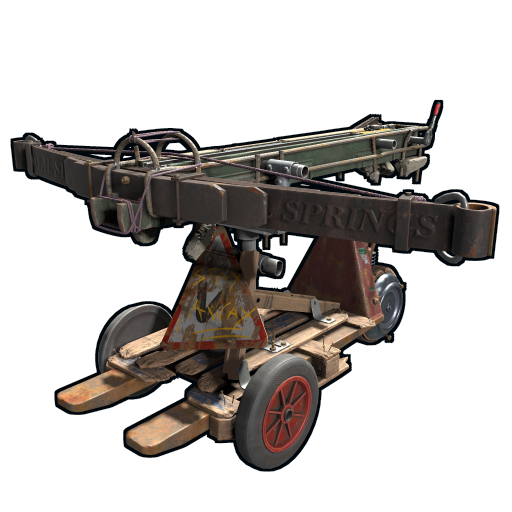 — a wheeled crossbow (plus a static variant for base defense). Bolts: Pitchfork (sweeping anti-player), Piercer (penetrates armored vehicles — yes, it counters the ram), Hammerhead (heavy, deals door damage) and Incendiary. It is the anti-vehicle and anti-player piece of the set with a door-breaching sideline. Bolt crafting: Hammerhead 5 HQM + 75 metal frags; Piercer 5 HQM + 75 metal frags; Incendiary 50 metal frags + 10 cloth + 10 low-grade fuel; Pitchfork 100 wood + 50 metal frags. The static Mounted Ballista uses the same recipe as the towed Ballista (250 metal frags + 1 gear + 2 sheet metal, WB2).
Siege Tower 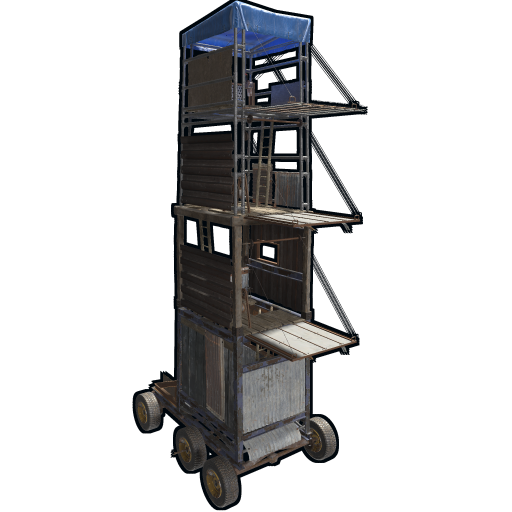 — a rolling three-level tower with a drawbridge on each level and a lockable door at the bottom. Roll it against a compound wall or a high open window and walk in over the top — it deals no damage, it just skips the twig-tower dance and gives cover while you do.
| Weapon | Craft cost (workbench) | Raid role | Moves by |
|---|---|---|---|
| Battering Ram | 500 wood, 100 HQM, 2 sheet metal, 1 tarp (WB2) | Breaks wood + stone construction | Drives (fuel-powered) |
| Catapult | 500 wood, 20 HQM, 1 gear, 1 rope (WB2) | AoE fire / propane bombs vs structures and players | Horse tow |
| Ballista (mounted) | 250 metal frags, 2 sheet metal, 1 gear (WB2) | Anti-vehicle, anti-player, door damage | Horse tow |
| Siege Tower | 500 wood, 250 metal frags, 1 gear (WB1) | — (no damage; wall access + cover) | Horse tow |
The niche: sulfur-free raiding. Every explosive path runs through the sulfur economy; a siege raid costs resources you have on day one, and all four sit cheap in the tech tree (15–60 scrap at a research table). The trade-off is that they are slow, loud, exposed and easy to counter online — siege weapons shine early wipe, on primitive-tagged servers, and against wood/stone starters, while post-week-one on vanilla, C4 is still faster and safer per raid. The May 2026 Mortar extended this line into true artillery for clan-compound raids — that meta shift is covered in Patch Meta 2026, not re-taught here.
Online vs Offline
Offline raids
Definition: the base owner isn't in-game.
- Pros: no defender response, no counter -raid, calm execution.
- Cons: still risk of online players patrolling, of raiders dying to traps/turrets .
- Tools: smart alarm
 on a friend's base can ping you when someone goes offline. (Or actually, watching from a window.)
 - Timing: late server-night (3-6 AM server time) is the offline sweet spot for most bases.
Online raids
Definition: defender is online.
- Pros: sometimes the loot drops directly (kill defender, take their inventory).
- Cons: active defense, faster raiders die.
- Required: team of 3+, coordinated comms, surge damage.
- Tactics: distract from one side, breach from another. Suppress embrasures with one player while the other plants C4 .
Step-by-step: raiding a 2x2 stone solo offline
You found a 2x2 solo base with honeycomb. Owner offline (confirmed by zero footstep sound, no activity for 20 minutes). You have 6 C4 + 2 satchels .
- Scout the front door side first. Walk the perimeter at dawn. Identify the TC location by looking at the upgrade pattern (TC room walls are usually sheet metal / armored, contrasting with the rest).
- Position your raid tower. Build a 3-foundation tower on the opposite side from the front door, slightly to one side. Climb up with twig blocks.
- From the tower, scout the interior through any windows or open frames. Identify the loot room and TC room.
- Plan the breach path. You want to go from outside → TC room in the fewest C4 possible. Usually that means: external wall (1 C4 ) → honeycomb wall (1 C4 ) → TC room door (1 C4 ) or wall (1 C4 ). Total ~4 C4 for TC + 2 C4 for the soul stash bunker = 6 C4 .
- Plant C4 . Stand close to the wall, hold E, place. Move at least 5m away before it detonates. C4 has a 10-second fuse .
- First breach. When wall 1 breaks, immediately push in. Place a sleeping bag inside the base if you have one (in case you die mid-raid).
- Second breach. Same pattern. Each breach = move forward.
- TC room reached. Auth on the TC , break locks on any internal doors, scoop all loot.
- Loot the bunker. If there's a soul-stash bunker under the TC , that's typically another 1-2 C4 to crack.
- Replace the front door with a new sheet metal door + your own lock if you want to occupy the base.
- Extract loot back to your base. Multiple trips if needed. Watch your back — other players notice raid sounds.
Step-by-step: raiding a clan compound online
You and 4 teammates want to raid a 3x3 clan compound. They're online. You have a Scrap Heli, full kits, 20 rockets , 8 C4 .
- One scout moves into a sniper position. SAR + scope. Calls out defender positions.
- Two breachers move on a perimeter wall, opposite from where defenders are concentrated.
- One support brings extra explosives and stays mobile.
- One driver holds the Scrap Heli ready for extraction. Land in a safe spot 100m away.
- First rocket volley at the exterior wall. 4 rockets per stone wall soft side, you have 5 walls to break through. Plan total 20+ rockets just on exterior path.
- As wall comes down, breachers push in. Support follows with C4 for interior.
- Snipers and defenders trade fire — sniper keeps defenders off the breach.
- Loot extraction by the Scrap Heli driver. Land, load, leave.
- Defenders may counter -raid your base in the next 24 hours. Have a backup base or stay vigilant.
Common mistakes
- Wasting C4 on hard side. Always seek soft side. Costs 2x.
- No raid tower for visibility. You can't fight what you can't see.
- Forgetting to bring a hammer + replacement door. You can occupy the base and reset to your TC .
- Sleeping bag in the open during a raid. Place it in cover, behind a wall.
- Loud minicopter approach. Defender hears the engine, retreats to bunker. Land 200m away.
- Hitting Bradley en route. Bradley shoots your minicopter from 100m. Avoid Launch Site air space.
- Bringing your best armor. Wear mid-tier metal. If you die, the kit isn't your wipe-ender.
Pro tips
- Raid in the morning for offline targets. Most players online at night, offline during US work hours.
- Skip the scrap tea for the recycle run — Scrap Tea boosts barrel scrap only; recycler yields are fixed and never tea-boosted.
- Don't engage Bradley during a Launch Site raid. Stick to the puzzle path and let Bradley patrol elsewhere.
- Watch for second-base hidden caches. Many serious players have a "raid bait" main base and a hidden actual base nearby.
- Don't talk on chat about the raid in advance. Server chat is monitored by streamers, clans, and griefers.
- Bring satchels for outer wood doors and weak walls. Cheap soak before you spend C4 on stone .
- The biggest win is loot you can carry home. Don't grief-destroy what you can't haul — leave it for the owner's reset.
- Online raids are dynamic. Plans break. Have a "if X dies, do Y" with your team.
- After a successful raid, log off for an hour. Lets the heat fade. Counter -raiders search for you immediately.
Reading a base before you raid
Elite raiders win the raid before the first charge is placed, in the scouting phase. Every base broadcasts information if you know how to read it. Before committing a single explosive, build a mental map of three things: where the loot is, what stands between you and it, and who is home.
- Find the Tool Cupboard side. The TC is usually deep in the base near the core loot. Window placement, the densest cluster of doors, and the side with the fewest external openings all point inward toward it. Raid toward the TC, not toward the nearest wall.
- Count the layers. Honeycomb — extra walls and triangle cells wrapped around the core — is invisible from outside but doubles or triples your explosive bill. A base that looks like a simple 2x2 from the street may be a 1x1 loot room inside three rings of stone. Peek through windows, check the roofline, and assume any well-built base is honeycombed.
- Check upkeep and decay. A base with crumbling, decayed walls has an empty or low Tool Cupboard — the owner may be gone for the wipe, and the raid is low-risk. Fresh, fully-repaired walls mean an active, possibly online owner.
- Identify external loot rooms. Many bases push shop fronts, vending machines or external boxes outside the core. These are cheap, fast partial raids that do not require cracking the main base at all.
The deciding question is always cost-to-loot. Sum the breach path, estimate the loot, and walk away if the math is bad. Discipline in target selection is the single biggest separator between raiders who gain ground over a wipe and raiders who go broke.
Planning the breach path
Once you have committed, the raid becomes a routing problem: find the cheapest sequence of breaches from outside to the loot. Three rules govern an efficient path:
- Doors beat walls, always. A sheet metal door costs one C4; the sheet metal wall beside it costs two. If a door is on your route, blow the door. Raiders who reflexively rocket walls burn three-quarters of their sulfur for nothing.
- Hit the soft side. Every wall and floor in Rust has a weak interior face that takes roughly double explosive damage. Once you are one cell inside, every further breach should be aimed at a soft side — raid through the base, not around its hardened shell.
- Go vertical when it is cheaper. Floors and ceilings are often softer or thinner than the walls guarding the same room. Raiding up through a floor or down through a roof can skip an entire honeycomb ring. Always price the vertical route alongside the horizontal one.
Plan the whole path before you place charge one. Running out of explosives halfway through a base is the worst outcome in Rust: you have spent your sulfur, made enormous noise, and handed the defender an open base to re-wall and counter-raid. Carry your full breach budget plus the safety margin, or do not start.
Online raid execution — the tactical layer
An offline raid is an engineering exercise; an online raid is a firefight wrapped around an engineering exercise. The defender will be shooting at you, repairing your breaches, and possibly calling in friends. Winning one requires splitting roles cleanly:
- The boomer places explosives and nothing else. Their job is rhythm — charge, retreat, detonate, advance — never breaking to fight. Every second they spend shooting is a second the breach is not progressing.
- The peeker(s) hold every angle the defender could shoot or push from, and watch for third parties. They are the boomer's shield.
- Counter the wall repair. A defender with a hammer and building resources can repair a breach faster than satchels can re-open it. The answer is burst breaching: stack enough charges to take a wall down in one detonation cycle so there is no window to repair. C4 and rockets exist precisely for this — their speed is what you are paying the sulfur premium for.
- Control the loot, then the TC. The instant you are inside, the priority is the Tool Cupboard. Authing or destroying it stops repairs, stops the base healing, and lets you wall yourself in against a counter-attack.
The offline raid inverts all of this: with no defender, satchels and even explosive ammo become viable because their slow, cheap, multi-hit nature is no longer a liability. The core meta decision — C4/rockets versus satchels — is therefore really a decision about whether anyone is home, not about the walls themselves.
Raid bases, towers and the external Tool Cupboard
Serious raids are staged from a raid base: a small structure built right next to the target during the raid. It stores spare explosives and kits, provides respawn bags so deaths do not end the raid, and lets you keep pressure on without running back to your main base. Building one is not optional on a contested server — a raid without a forward respawn ends the moment the first raider dies.
Key raid-base principles:
- Build it fast and cheap. It only has to survive the raid. Twig and wood with a couple of doors is enough; do not over-invest in something you will abandon.
- Place an external Tool Cupboard in the area to block the defender or a third party from building their own counter-raid tower nearby.
- A raid tower — a tall thin structure with a platform — lets you reach upper floors, roof bunkers and elevated loot rooms. Many late-wipe bases hide loot high specifically to force raiders into the open while building a tower.
- Stash your spare explosives, not all of them on your body. A raider killed while carrying twenty C4 just funded the defender's counter-raid. Keep the bulk locked in the raid base and resupply between detonation cycles.
Costly raiding errors — and the fixes
- Raiding into the hard side. Hitting exterior faces doubles your cost. Fix: get one cell inside, then aim every charge at a soft side.
- Under-farming the route. Running dry mid-raid hands the base back. Fix: convert the full breach path to gunpowder, add 25%, farm that, then start.
- Wrong explosive for the tier. Satchels against armored walls is a sulfur bonfire. Fix: satchels for stone, C4 and rockets for sheet metal and armored.
- No raid base. One death and the raid is over. Fix: always build a forward base with bags before placing charge one.
- Ignoring the third party. Raid noise carries across the map and draws opportunists who let you do the work then take the loot. Fix: post a watcher, raid fast, and never assume the defender is your only threat.
- Skipping the TC. Leaving the Tool Cupboard intact lets the owner repair behind you and re-trap the base. Fix: the TC is your first objective the moment you are inside.
Counter-raiding & online-raid defense
An offline raid is a math problem; an online raid is a fight. When raiders hit a base you are actively defending, your goal is not to be unbreakable — it is to make the raid take long enough and cost enough that the attackers either bleed out their explosives or get third-partied. Everything below is about defending during a live breach.
Door replacement under fire
The single most important counter-raid skill is replacing a blown door faster than raiders can blow the next one. Keep a stack of spare sheet metal / armored doors and locks in a box next to every honeycomb wall and airlock. When a door goes down:
- Place the new door from behind the frame so your body is not exposed in the gap while you build.
- Lock it immediately — an unlocked door is an open door. A code lock is faster to deploy than a key lock under pressure.
- If raiders are shooting through the gap, place a frame or half-wall + shop front first to break their line of sight, then door behind it.
- Layered honeycomb means each blown door only reveals another wall — every door you re-place forces the raiders to spend another satchel or rocket.
The economics are brutal for the attacker: a sheet metal door costs you a few hundred metal; replacing it forces them to spend a rocket or several satchels again. Win the replacement race and most raids stall.
Grenade & flank play
Raiders stacking on a doorway to place explosives are clustered and predictable. A well-timed F1 grenade or beancan bounced into that cluster forces them to scatter and resets their satchel placement. Cook the throw so it detonates as it lands rather than giving them time to walk off it.
Do not only defend from inside the box. If you have numbers, send one player outside and around to flank the raiders from behind while they focus the wall. Raiders breaching are committed forward and rarely watch their rear — a flanker who catches them mid-placement can wipe the raid party and let you collect their loot.
Recovering dropped raid tools
When you kill a raider, everything they were carrying — rockets, C4, the launcher itself — drops in their loot bag. That is the prize. Priorities:
- Push to secure the corpse before their teammates can loot-grab it. A dropped rocket launcher and a stack of C4 can fund your own counter-raid.
- If you cannot hold the body, deny it: grab what you can and retreat, or have a teammate snatch the bag while you provide cover.
- Watch for dropped explosives left armed on the ground — pick up unplaced C4/satchels, they are inert until thrown or stuck.
- Recovered raid tools flip the engagement: now you are the one with explosives and the attackers are out of pocket.
Perimeter denial
The best place to stop a raid is before it reaches your walls. Perimeter denial buys time and information:
- External TCs and twig spam around your base block raiders from placing their own building privilege, raid bases, or sleeping bags nearby.
- Shotgun traps and auto turrets covering the likely breach wall and rooflines force raiders to spend time and HP just to set up.
- External walls and gates create a kill-funnel and a buffer; raiders must breach the perimeter before they even reach the loot room, multiplying their explosive cost.
- Deny raid-tower spots — pre-place walls or pillars on the flat ground and rooftops adjacent to your base so attackers cannot build a clean shooting/boosting platform.
- Keep rooftop access controlled: a raider who boosts onto your roof bypasses your ground defenses entirely. Button up roof entrances and put turret coverage above.
Counter-raiding is won on preparation. Spare doors pre-staged, honeycomb depth, a flank route out of the base, and a perimeter that costs explosives to cross all combine so that any online raid becomes a slow, loud, expensive fight — exactly the kind most raiders abandon.
Raid-cost charts
These charts give the explosive counts and sulfur cost to breach each wall and door tier, current for the 2026 meta (verified against rustlabs and the Facepunch wiki). Sulfur figures are the full craft chain — gunpowder plus the explosive itself. Per-explosive sulfur cost: C4 ≈ 2,200, Rocket ≈ 1,400, Satchel ≈ 480, Explosive 5.56 ≈ 25 per round, Beancan ≈ 120 (60 gunpowder + 20 frags).
Always raid the soft side of a wall where possible — the interior face of a stone or higher wall takes far more damage than the exterior, often halving the count. The numbers below are the standard exterior (hard-side) figures unless noted.
Explosives per wall tier
| Wall tier | C4 | Rockets | Satchels | Explosive 5.56 | Beancans |
|---|---|---|---|---|---|
| Wood wall | 1 | 2 | 3 | ~50 | ~9 |
| Stone wall | 1 | 4 | 4 | ~185 | ~24 |
| Sheet metal wall | 2 | 8 | 23 | ~400 | not practical |
| Armored wall | 8 | 15 | not practical | not practical | not practical |
Stone falls to roughly 4 satchels or 4 rockets either way — the soft side matters most for melee and tool raiding, so check which face you are on before swinging a pickaxe, not before placing a charge.
Explosives per door tier
| Door / target | C4 | Rockets | Satchels | Explosive 5.56 |
|---|---|---|---|---|
| Wooden door | 1 | 1 | 2 | ~25 |
| Sheet metal door | 1 | 2 | 4 | ~63 |
| Garage door | 3 | 3 | 9 | ~150 |
| Armored door | 2 | 4 | ~20 | not practical |
Sulfur cost compared
Multiplying counts by per-explosive sulfur shows which tool is actually cheapest for each barrier:
| Target | C4 sulfur | Rockets sulfur | Satchels sulfur | Explosive 5.56 sulfur |
|---|---|---|---|---|
| Stone wall | ~2,200 | ~5,600 | ~1,920 | ~4,625 |
| Sheet metal wall | ~4,400 | ~11,200 | ~11,040 | ~10,000 |
| Armored wall | ~17,600 | ~21,000 | — | — |
| Sheet metal door | ~2,200 | ~2,800 | ~1,920 | ~1,575 |
| Garage door | ~6,600 | ~4,200 | ~4,320 | ~3,750 |
Note that satchels and explosive ammo are often cheaper in raw sulfur but far slower and louder — a longer breach gives the defender more time to wake up, repair, and counter. The "true" cost of a raid includes that time risk, not just the sulfur.
Cheapest raid path per tier
- Wood bases: satchels or even beancans. Wood is cheap to breach — do not waste rockets or C4. A handful of satchels clears walls and doors.
- Stone bases: satchels are the cheapest by sulfur, but rockets are far faster and quieter to deliver. For an online raid on stone, rockets win on speed; for a quiet offline, satchels save sulfur.
- Sheet metal bases: C4 is both the cheapest and the most reliable — 2 per wall, instant, no missed shots. Explosive ammo costs more sulfur and is extremely slow.
- Armored bases: C4 only. At 8 per wall it is roughly 3,400 sulfur cheaper than the 15-rocket route, with none of the miss risk. Always target the soft side and look for cheaper doors first.
- General rule: raid the cheapest path into the loot, not the nearest wall. A garage door at 3 C4 beats an armored wall at 8 C4 — scout the base for its weakest entry before crafting a single charge.